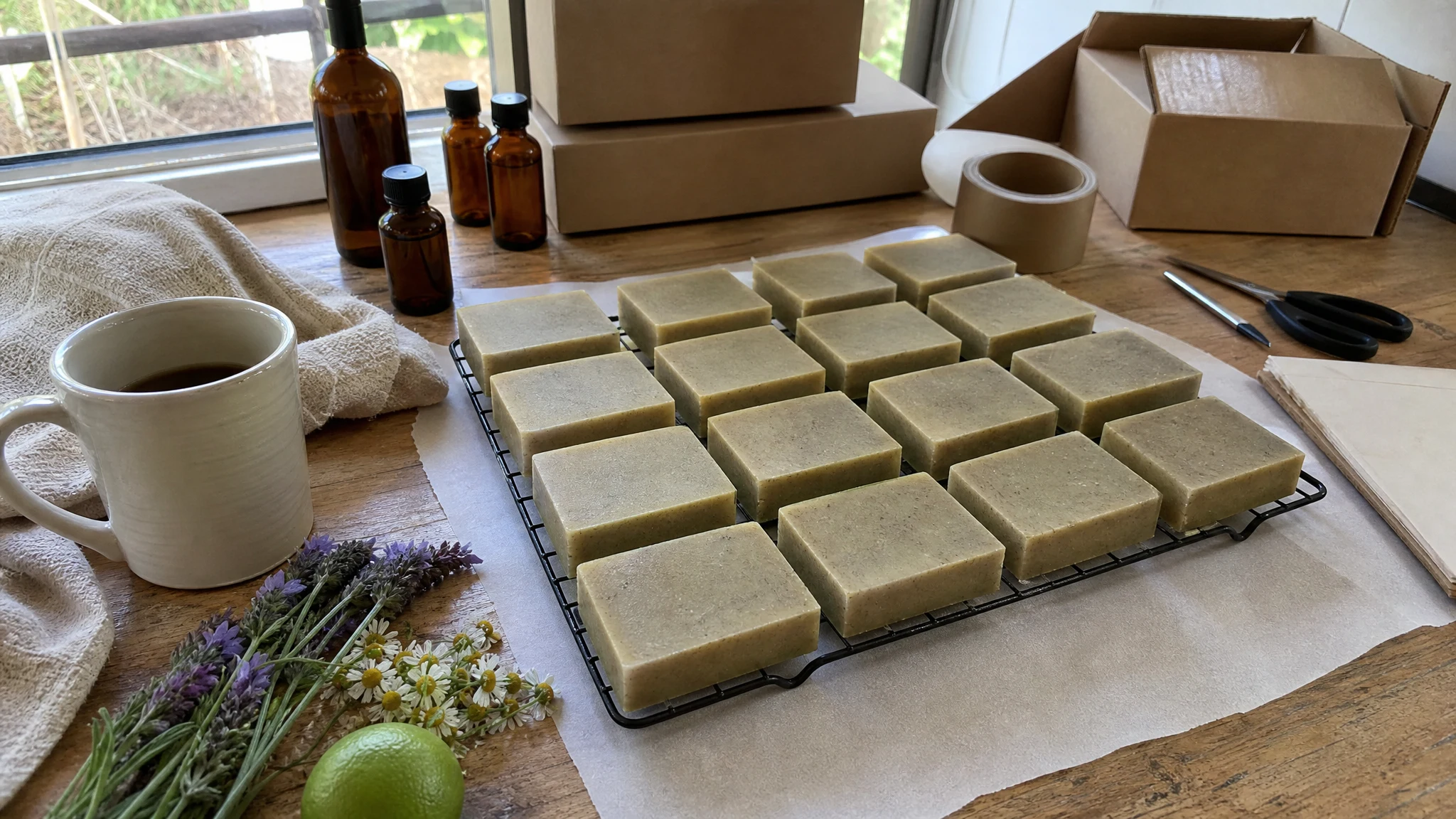
Scenting Homemade Soap with Calm Essential Oil Blend
Our Calm Essential Oil Blend was built for diffusers and lotions first, but it works in homemade soap too, as long as you know what soap does to a citrus-forward scent. The blend is lavender, chamomile, and bergamot together, and each of those three oils behaves a little differently once it meets soap base or raw lye.
Melt-and-pour vs. cold process
Melt-and-pour is the forgiving option. You melt the base, stir in the oil once it's cooled slightly off the boil, and pour. There's no cure time and no alkaline reaction to work against, so what you smell when you add the oil is close to what you'll smell in the finished bar, at least for the first few weeks.
Cold process is a different story. The soap sits through saponification and then cures for four to six weeks, and that stretch of time and heat is hard on lighter top notes. Bergamot is cold-pressed citrus peel oil, and citrus top notes are the first thing to fade in a curing bar. Lavender and chamomile, both steam-distilled florals, tend to hold up better through the cure. In practice, that means a cold process soap made with this blend will likely smell brighter and more citrus-forward on day one and settle into something softer and more floral-herbaceous by the time it's ready to use. That's not a flaw in the oil, it's just how cold process soap ages.
Ready to try Calm Essential Oil Blend?
Sold in sizes from 0.5 oz to 16 oz, lab-tested and shipped fast.
Shop Calm Essential Oil BlendWhere to start with ratios
For cold process, a common starting point for essential oils in soap is around 3% of your total oil weight, which works out to roughly 0.5 to 1 ounce of essential oil per pound of oils in the recipe (so about 15 to 30 grams per pound). We'd start at the low end of that range with this blend, since bergamot can be a bit assertive before it settles, and increase in your next batch if the cured bar comes out too faint.
For melt-and-pour, start with about 1 teaspoon of essential oil per pound of soap base, stirred in gently once the base has cooled a bit below boiling. Pouring while the base is too hot will cook off scent, especially the bergamot, before it ever sets.
What commonly goes wrong
- Adding oil while the base is too hot. This volatilizes the lighter top notes first, so your finished soap smells mostly like chamomile and lavender with little of the bergamot brightness left.
- Overdoing it in cold process. Essential oils can speed up trace in cold process soap, and too much can cause the batter to thicken or seize faster than expected. Measure by weight, not by eye, and stick close to the 3% range until you've made a batch or two.
- Judging the scent too early. A cold process bar smells different the day you unmold it than it does after a full cure. Wait until curing is done before deciding you need more oil next time.
Who should be cautious
Bergamot is a citrus peel oil, and like other citrus oils it's worth being mindful of if you have sensitive or reactive skin, since it's one of the stronger-smelling components in this blend even in small amounts. Anyone with a history of skin sensitivity should patch test a finished bar before using it regularly, and soap made for children or for anyone pregnant or nursing should be approached the same way you'd approach any scented bath product, with a smaller amount and a wait-and-see first use.
If you want to see the blend in its natural form before you start measuring it into a batch of soap, it's on our shop page at /shop/.