 Benefits & Uses
Setting Up a Meditation Corner: Where to Place a Diffuser Scented with a Lavender, Bergamot and Chamomile Blend
Most advice on building a meditation corner obsesses over the cushion, the candle, the little dish of stones — and says almost nothing about the one object that's actively changing the air you breathe for the next twenty minutes. Get the diffuser placement wrong and you'll either stop noticing the scent within a few minutes, or you'll sit there distracted by a cloud of mist drifting straight into your face. Neither helps the part of meditation that smell is actually good for: giving your attention something steady to return to.
Table of Contents
Key Takeaways
- Place the diffuser three to six feet from your seat, slightly to the side, at chair or low-table height.
- Olfactory neurons adapt within minutes, so placing the diffuser too close makes the scent fade faster.
- Run the diffuser five to ten minutes before sitting so bergamot's sharp top note settles first.
- Bergamot fades fastest, lavender holds the middle, and chamomile lingers longest in this blend.
- Be cautious diffusing around cats, infants, or in small sealed spaces like closets, where concentrations build faster.
Why the obvious spot is usually the wrong one
A lot of generic advice says to tuck the diffuser into an actual corner of the room, out of the way, so it scents the space in general. For a dedicated meditation corner, that's backwards. If the diffuser sits too far from where you're sitting, or behind a cushion, bookshelf, or screen that blocks airflow, the mist pools near the unit and barely reaches you. You end up turning the diffuser up, adding more blend, and still feeling like nothing's happening.
The opposite mistake is placing it right next to your head on the assumption that closer means stronger. It does, for about ninety seconds. Olfactory receptor neurons adapt quickly to a constant odor source — this is why a strong smell seems to fade the longer you're exposed to it, even though the air hasn't changed. Psychophysical research on odor adaptation has shown this habituation effect happening within the first few minutes of continuous exposure (Dalton, 2000, Chemical Senses). Put the diffuser too close and you'll lose the scent to your own nose before you've settled into your breath.
Finding the distance and airflow that actually work
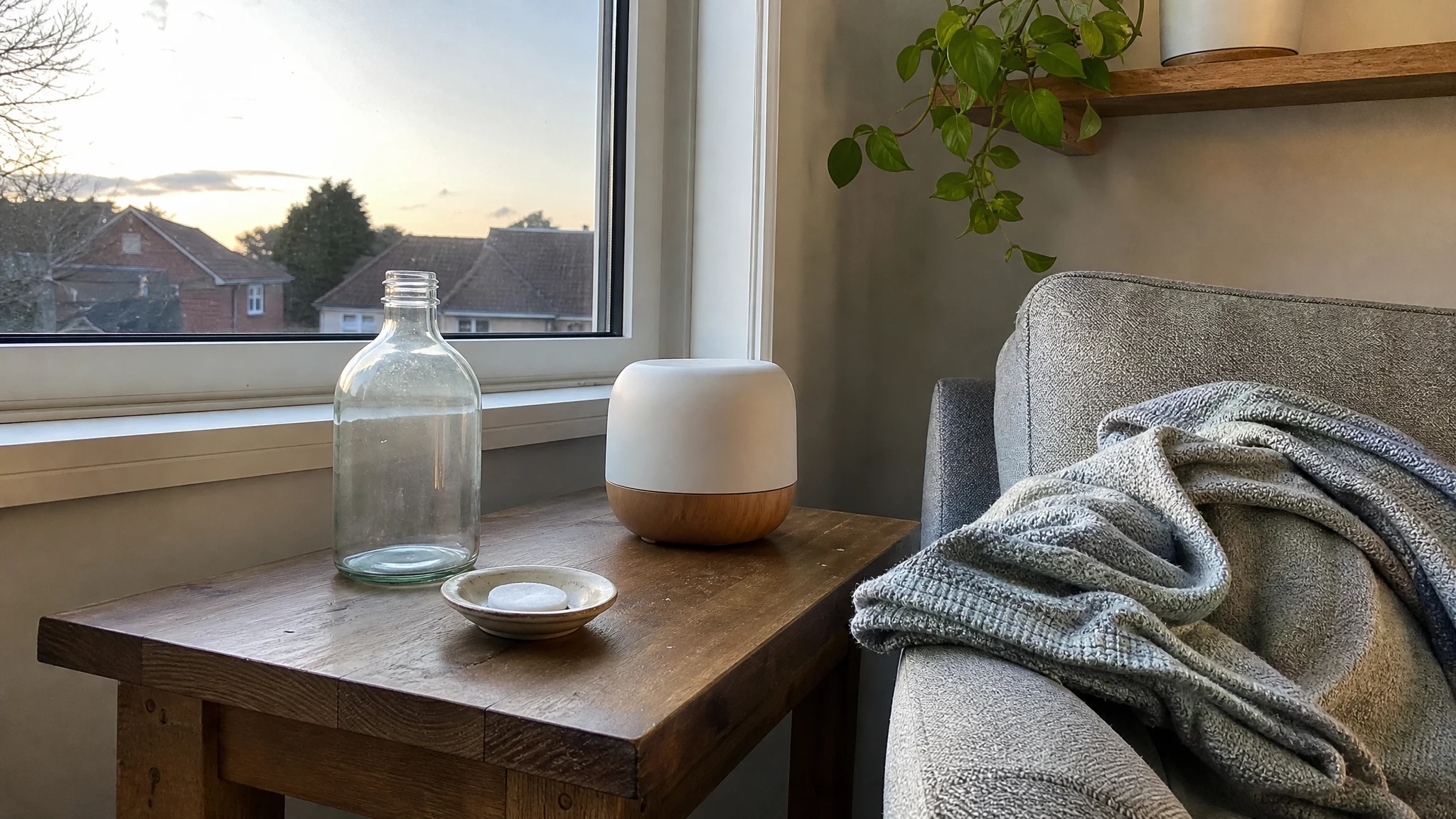
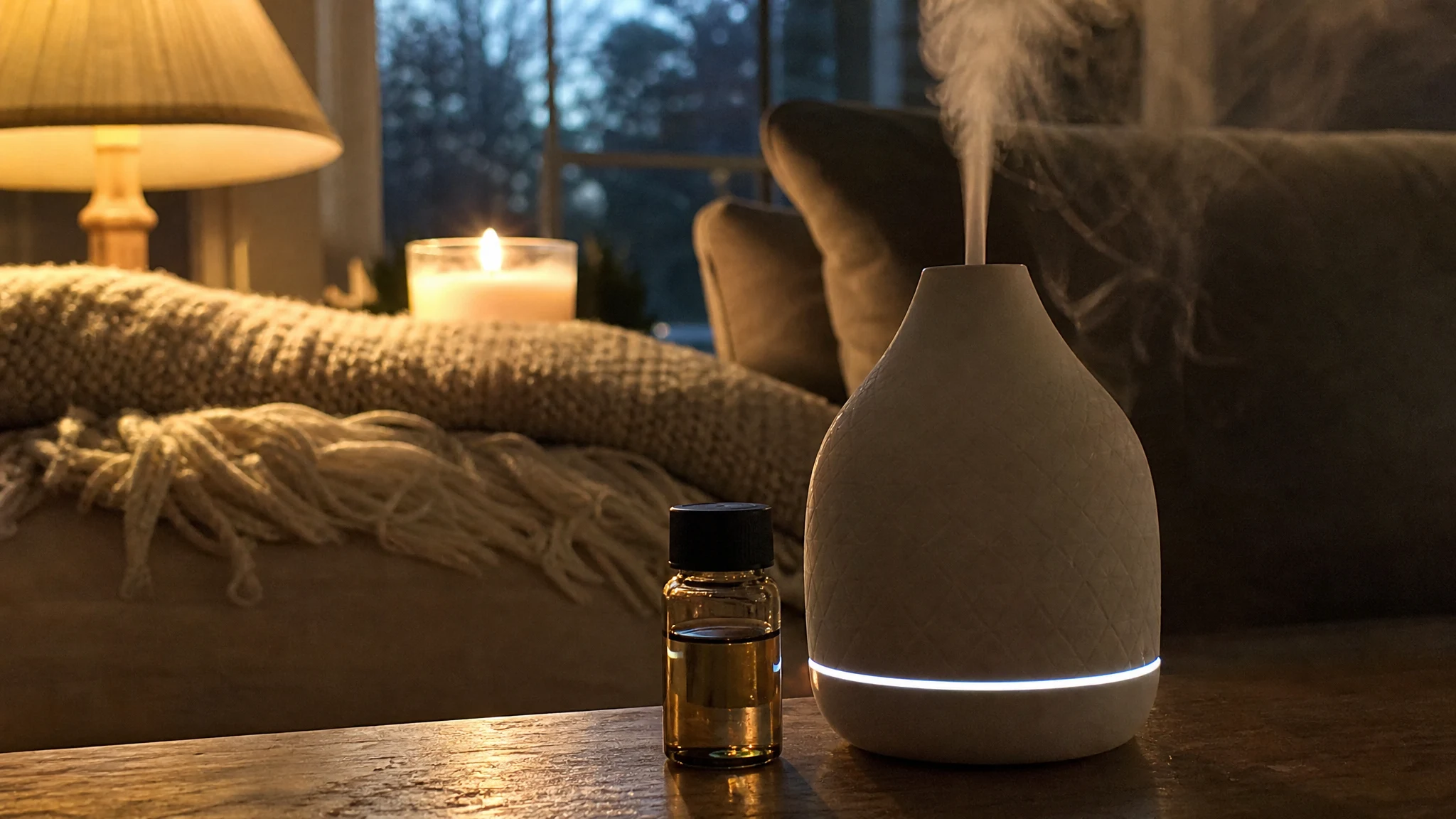
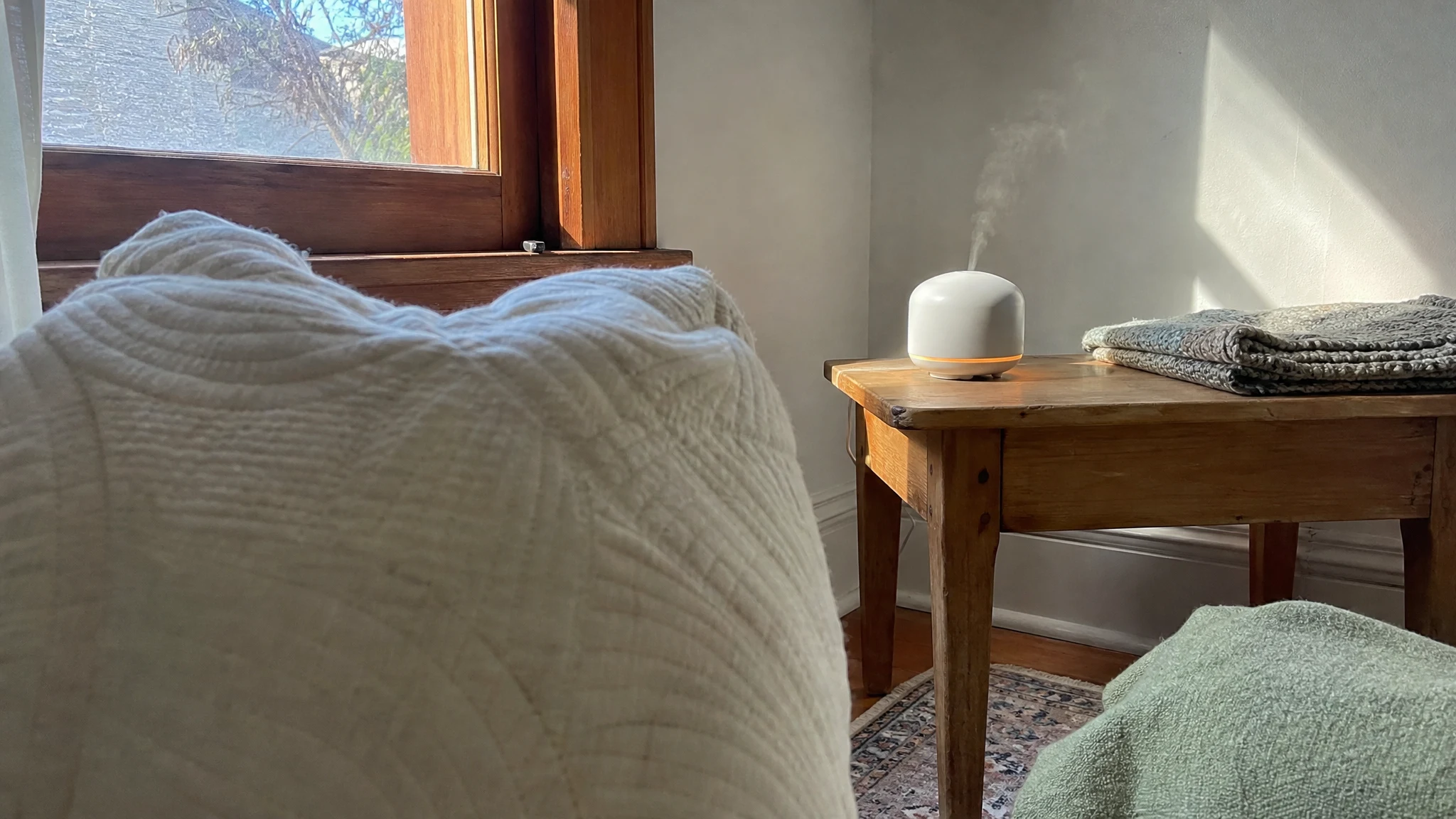
What you want is a position roughly three to six feet from where you sit, slightly to the side rather than directly in front of your face, and raised to about chair or low-table height rather than on the floor. This keeps the mist in your breathing zone without aiming it at you like a fan. A spot near a doorway or a slightly open window also helps — not because the scent needs to escape, but because a little air movement keeps the blend from building into a flat, heavy wall of smell, which is the fastest route to adaptation and headaches. The U.S. EPA notes that ventilation is one of the main ways to keep any airborne compound, fragrance included, from concentrating in a closed room (EPA, Volatile Organic Compounds' Impact on Indoor Air Quality). Avoid setting it directly on a wood altar table, incense tray, or anything with a finish you care about — ultrasonic diffusers work by vibrating water into a fine mist, and condensation from that mist can leave a film on wood or electronics nearby over repeated sessions.
Ready to try Calm Essential Oil Blend?
Sold in sizes from 0.5 oz to 16 oz, lab-tested and shipped fast.
Shop Calm Essential Oil BlendSetting it up before you sit down
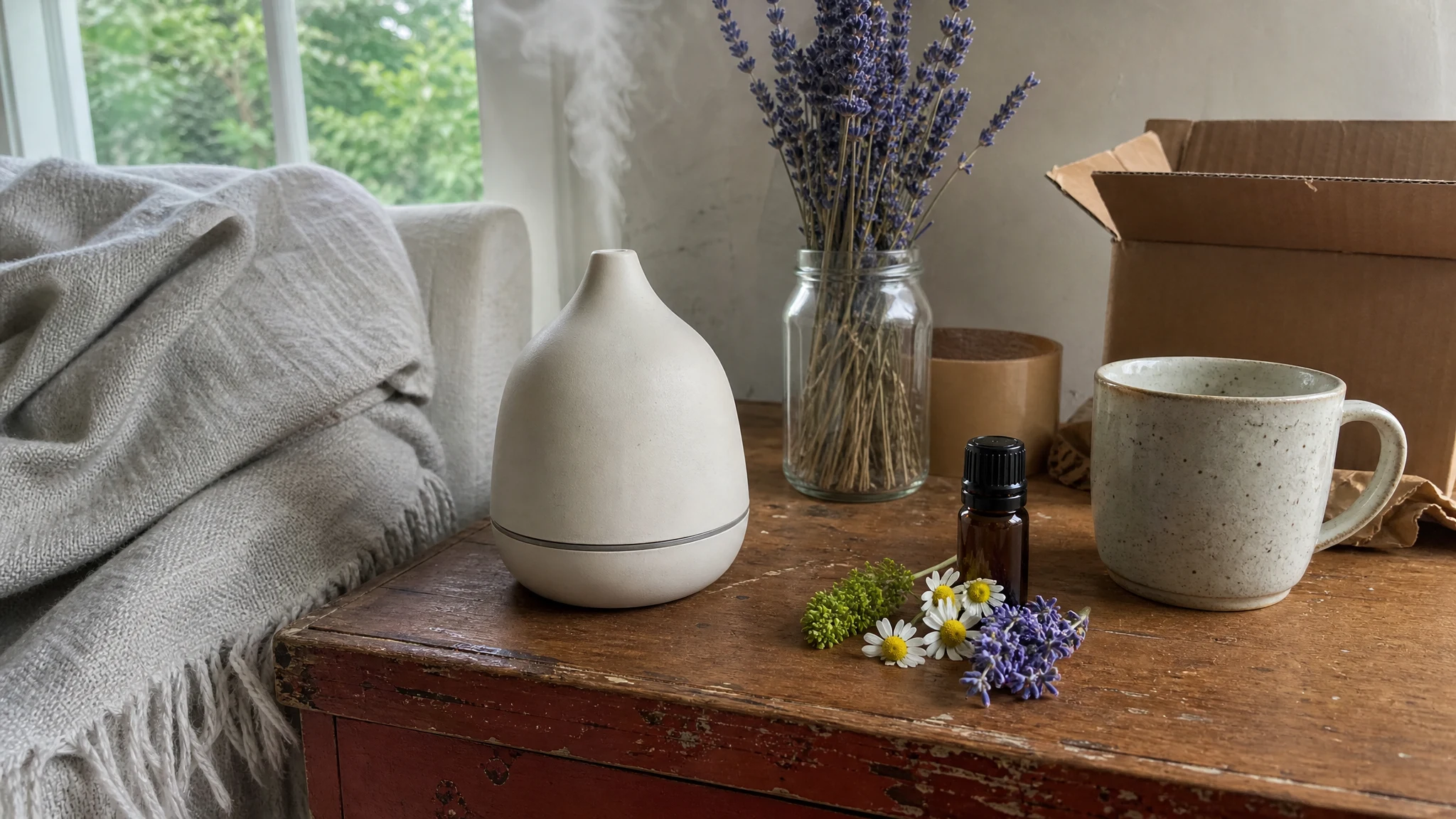
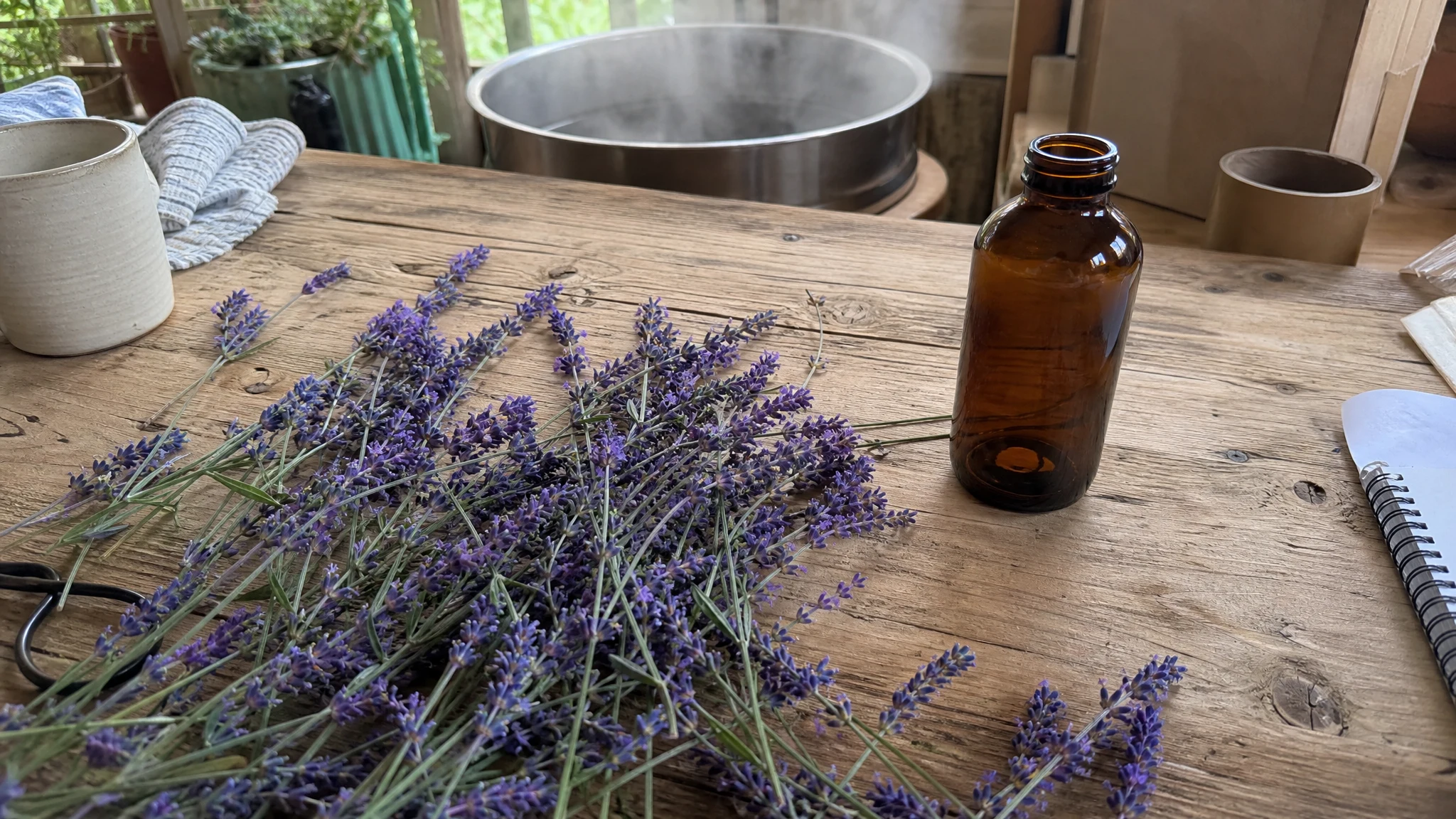
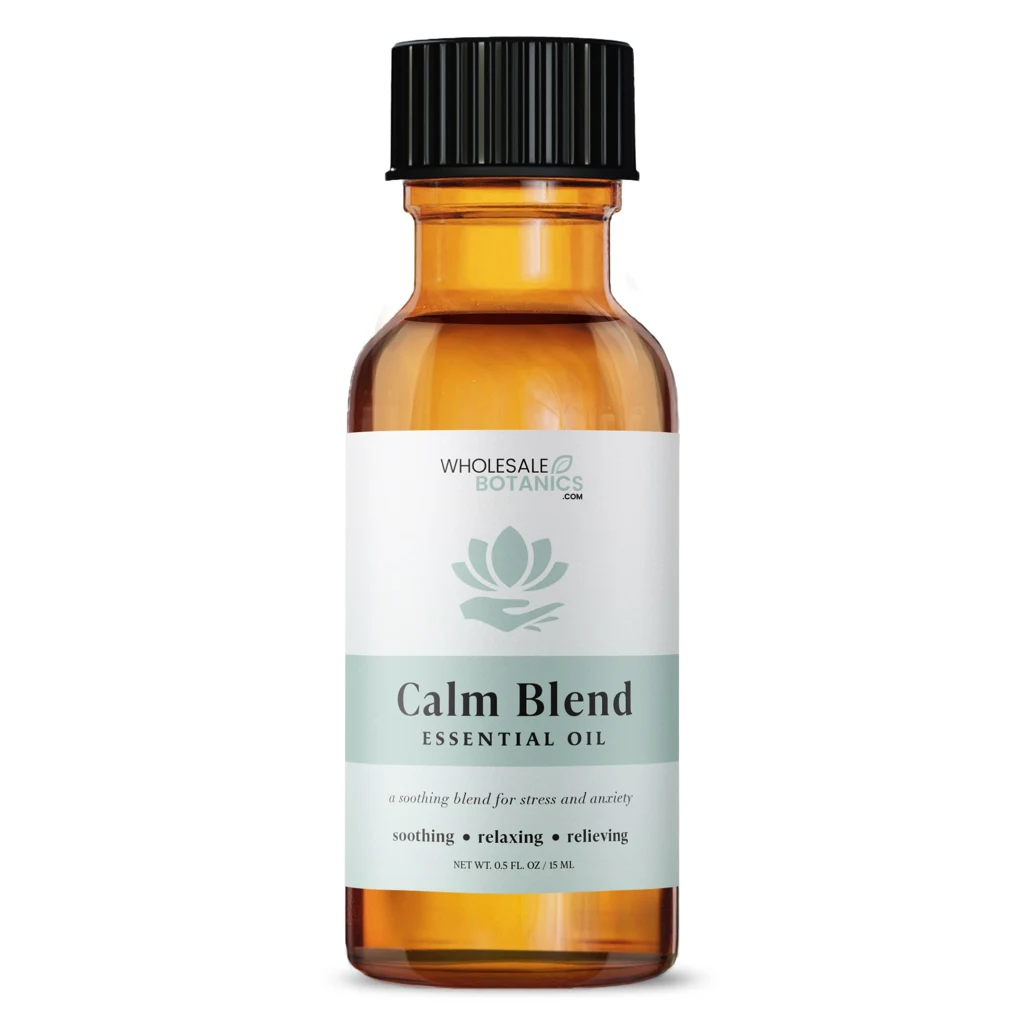
Fill the diffuser to its waterline and add your drops of Calm before you sit, not after — give it five to ten minutes to run before your session starts. That timing matters more than people expect with this particular blend. Bergamot peel oil is cold-pressed and made of smaller, more volatile molecules than lavender or chamomile, so it's the first thing you smell and the first thing to fade — that bright citrus opening is what perfumers would call the top note. Lavender, steam-distilled from the purple flower spikes of Lavandula angustifolia, holds the middle. Chamomile, steam-distilled from the small white and yellow blooms of Matricaria chamomilla, is heavier and lingers longest, which is why the blend reads as citrus up front and apple-like and warm by the time you've been sitting a while. If you start the diffuser cold right as you sit down, you'll spend your first few breaths distracted by bergamot's sharp opening instead of settling into the rounder scent the blend is built to land on.
If you want more depth underneath it, this blend layers well with cedarwood or sandalwood in the same diffuser — a drop or two of either alongside your usual amount of Calm gives the finish more weight without changing the floral-citrus character up front.
What it should feel like once it's right
A well-placed diffuser is something you only notice when you deliberately check for it. Take one slow breath in through your nose a minute or two into your sit — you should pick up the blend clearly. Then let your attention go back to your breath. If the scent disappears entirely from the background of your awareness, that's not the diffuser failing, it's your nose adapting exactly the way it's supposed to; the fix is distance and airflow, not more drops. If instead you feel a dull headache, tightness, or the smell feels thick rather than present, you're too close or the room's too sealed — move the unit further away or crack a window rather than reducing run time, which mostly just delays the same problem.
Where this isn't a good fit
A diffuser running for a 20- or 30-minute sit in a reasonably sized, ventilated room is a modest amount of airborne oil. It's a different story in a small, closed space — a walk-in closet converted into a meditation nook, for instance — where concentrations build faster and ventilation matters even more. If you share your home with a cat, be cautious about diffusing in any room they have access to; cats process certain plant compounds differently than dogs or people do, and animal poison control groups specifically flag essential oil diffusers as a risk worth knowing about (ASPCA, Animal Poison Control Center). The same goes for infants and anyone with asthma or a known fragrance sensitivity in the room — a meditation corner someone else has to walk through isn't the place to run a diffuser at full strength. If you're pregnant, ask your OB or midwife before making inhaled essential oils part of a daily routine, since tolerance can vary. And it's worth saying plainly: this blend is a sensory anchor for your practice, not a treatment for anxiety or sleep problems — the meditation is doing that work, the scent is just giving your attention something pleasant to come back to.
We make this blend by steam-distilling lavender flowers and chamomile blossoms separately, cold-pressing bergamot from the fruit's peel, and combining the three in small batches — you can find it at our shop if you'd like to try the combination described here.
Frequently Asked Questions
How far should a diffuser be from my meditation seat?
Place it roughly three to six feet from where you sit, slightly to the side rather than directly in front of your face. Raise it to chair or low-table height instead of the floor. This keeps mist in your breathing zone without aiming it at you like a fan.
Why does the scent disappear a few minutes into my sit?
Your nose is adapting, which is normal. Olfactory receptor neurons habituate to a constant odor within the first few minutes of exposure. The article says the fix is better distance and airflow, not adding more drops, since placing the diffuser too close only speeds up the fade.
How long before meditating should I start the diffuser?
Start it five to ten minutes before you sit, after filling it to the waterline and adding your drops of Calm. This lets bergamot's bright, volatile top note settle first, so you aren't distracted by its sharp opening and can settle into the rounder blend.
What should I do if the scent gives me a headache?
Move the diffuser further away or open a window. A dull headache, tightness, or a thick-feeling smell means you're too close or the room is too sealed. The article advises against simply reducing run time, because that mostly delays the same problem.
Can I diffuse this blend if I have a cat at home?
Be cautious about diffusing in any room your cat can access. The article explains that cats process certain plant compounds differently than dogs or people, and animal poison control groups flag essential oil diffusers as a risk. Infants and people with asthma also warrant similar care.
What can I add to deepen the Calm blend in a diffuser?
Cedarwood or sandalwood layer well with it. Add a drop or two of either alongside your usual amount of Calm. This gives the finish more weight without changing the floral-citrus character up front, which is led by bergamot and followed by lavender and chamomile.