 Sourcing & Science
From Purple Flower Spikes to Oil: How Steam Distillation Works for Lavandula angustifolia
Cut a handful of lavender spikes, drop them in a pot of water, and bring it to a boil — that's roughly what most people picture when they hear "steam distilled." It isn't what actually happens, and the gap between that picture and the real process explains a lot: why lavender oil smells the way it does, why the bergamot in the same bottle is made by a completely different method, and why a distiller who rushes the job can ruin a batch without scorching a single flower.
Table of Contents
Key Takeaways
- Lavender flowers sit on a perforated tray while steam passes through them, so they never touch boiling water.
- Water and oil vaporizing together boil below either one's own boiling point, allowing extraction near 100°C.
- Bergamot oil is cold-pressed rather than distilled because its oil sacs rupture under mechanical pressure alone.
- Chamomile oil turns deep blue during distillation as colorless matricin converts into chamazulene under heat.
- Distillation timing is a window: too short lowers yield, while too long degrades esters like linalyl acetate.
The oil never touches boiling water
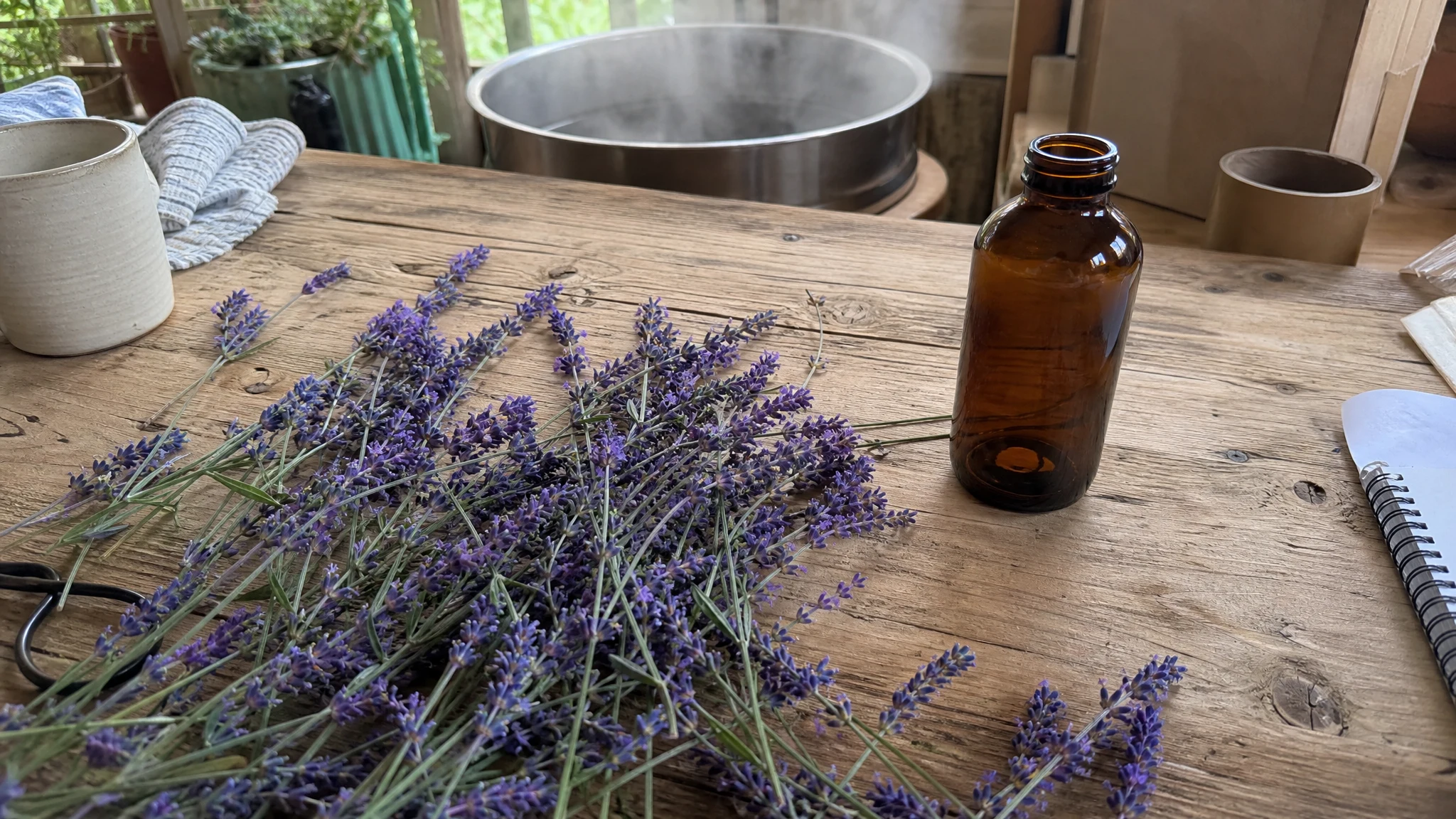
In real steam distillation, Lavandula angustifolia flower spikes sit on a perforated tray inside a sealed chamber. Steam is generated separately and passed up through the plant material — the flowers are never submerged in boiling liquid. As the steam moves through the spikes, it ruptures the tiny oil-bearing structures on the calyx and picks up the volatile aromatic compounds, carrying them upward as vapor.
Here's the part that trips people up: lavender's aromatic compounds, like linalool and linalyl acetate, have boiling points well above 200°C (392°F) on their own. Steam distillation works because when two substances that don't mix — water and oil — vaporize together, each exerts its own vapor pressure independently, and the combined mixture boils at a temperature lower than either one would alone. That's basic physical chemistry, and it's the entire reason this method exists: it lets you pull fragile aromatic molecules out of a plant at around 100°C instead of the 200°C-plus it would otherwise take, a temperature that would destroy them before they ever reached the condenser.
The steam and oil vapor travel together into a condenser, cool back into liquid, and separate in a collection vessel because the oil is lighter than water and doesn't dissolve in it. What's left behind is lavender hydrosol; what floats on top is the essential oil.
Why the same logic doesn't apply to bergamot
This is where a lot of generic explanations of essential oil distillation fall apart: they treat it as one universal recipe. It isn't. The extraction method follows the anatomy of the plant material, not a fixed industry standard.
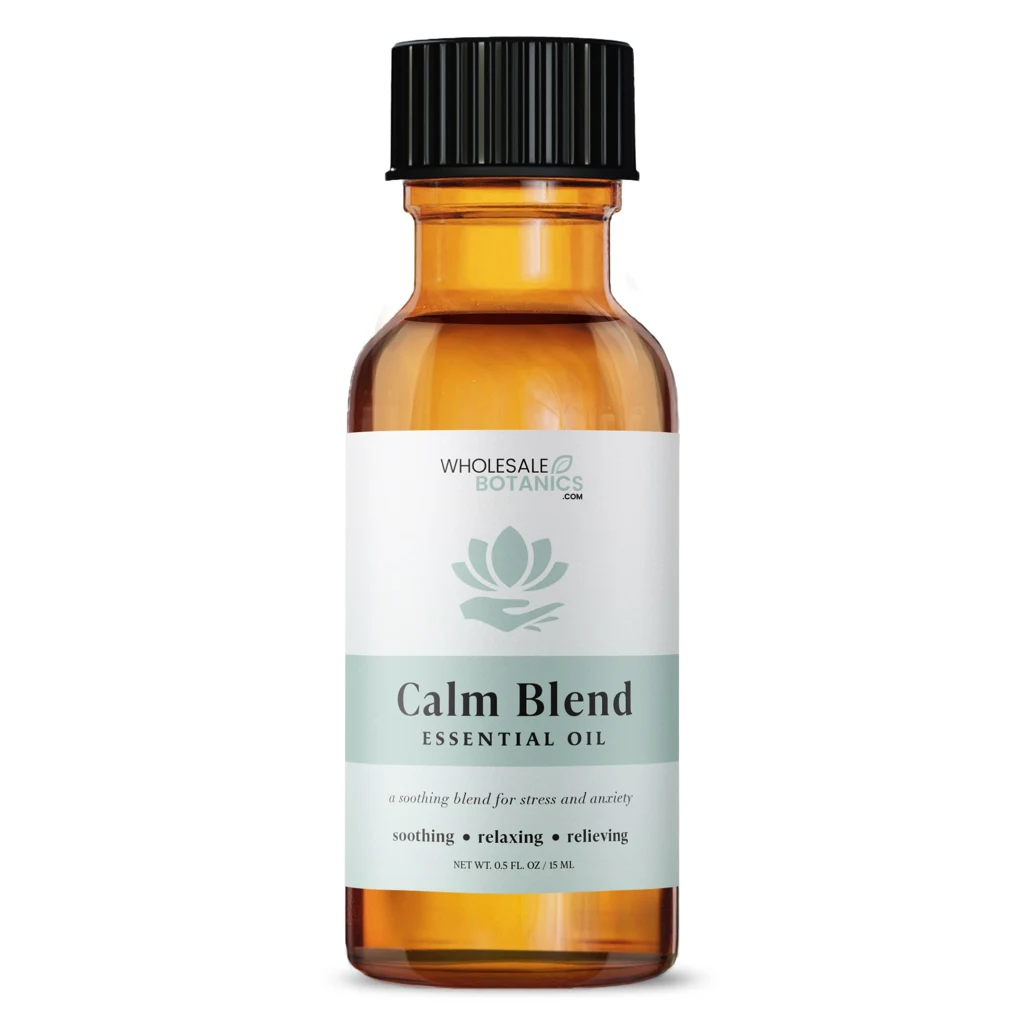
Citrus bergamia's aromatic oil doesn't sit inside heat-tolerant glandular structures the way lavender's does. It's held in oil sacs just under the surface of the peel, and those sacs rupture under simple mechanical pressure. That's why bergamot oil in our Calm Essential Oil Blend is cold-pressed, not distilled: the peel is pressed and the oil is separated from the resulting juice and pulp, with no heat involved at any stage. Running bergamot peel through a steam still would work, technically, but it would solve a problem that doesn't exist while needlessly exposing heat-sensitive compounds like bergapten to temperatures they don't need to survive. Cold pressing isn't a lesser or cruder method than distillation — it's the correct one for this particular plant part, full stop.
Matricaria chamomilla sits in between. Its small white and yellow blooms are steam-distilled much like lavender, for the same underlying reason: the aromatic compounds are bound inside plant tissue that needs steam's heat and vapor to release them. One detail that surprises people: fresh chamomile flowers aren't blue, but chamomile oil famously is, because a colorless compound called matricin converts into deep-blue chamazulene under the heat of distillation itself (Baser & Buchbauer, Handbook of Essential Oils, CRC Press, 2010). The color isn't added afterward — it's evidence that the heat of the process is doing real chemistry, not just carrying the oil out unchanged.
Ready to try Calm Essential Oil Blend?
Sold in sizes from 0.5 oz to 16 oz, lab-tested and shipped fast.
Shop Calm Essential Oil BlendWhere timing decides the outcome
Distillation isn't a fixed endpoint, it's a window, and both ends of that window cost something. Cut the run short and aromatic compounds get left behind in the spent plant material, so yield suffers. Run it too long or too hot and you start degrading the very esters, like linalyl acetate, that give lavender its soft floral sweetness, trading a refined scent for a sharper, more medicinal one as harsher compounds come through. This is a real part of why ISO 3515, the international standard covering lavender oil, sets compositional benchmarks such as minimum ester content (International Organization for Standardization, 2002) — the standard exists precisely because "steam distilled" on a label only confirms the method, not that the timing was right.
Where this method has real limits
None of this makes steam-distilled or cold-pressed oil a treatment for anything. These are fragrance and cosmetic ingredients, a distinction the FDA draws clearly for products marketed this way (U.S. Food and Drug Administration, fda.gov/cosmetics), not drugs, and no distillation method changes that. Lavender and chamomile oils can smell wonderful and still do nothing for a diagnosed medical condition; that kind of question belongs with a physician, not a bottle of oil.
There's also a practical caution worth naming with bergamot specifically: cold-pressed citrus peel oils retain furanocoumarins like bergapten, which can make skin more reactive to UV light after topical contact (Tisserand & Young, Essential Oil Safety, 2nd ed., Churchill Livingstone, 2014). Anyone applying a bergamot-containing blend to skin before sun exposure should ask a dermatologist or a qualified aromatherapist about timing rather than guess.
Why it ends up in one blend
Each of these oils is finished completely on its own before any blending happens: the lavender is distilled, the chamomile is distilled, the bergamot is pressed, and only afterward are the three combined in careful proportions for the Calm Essential Oil Blend. That order matters. Blending first and trying to process a mixture would mean treating delicate floral esters and tough citrus peel oil the same way, which the chemistry above should make clear doesn't work.
What you get at the end is a scent that opens with bergamot's bright citrus snap, settles into lavender's soft floral note, and finishes with chamomile's gentle, apple-like warmth, rounded and herbaceous rather than sharp or sweet. It pairs well with cedarwood, vanilla, or sandalwood in a diffuser blend, stirs nicely into melted soap base or candle wax, and works in unscented lotion or a simple water-and-witch-hazel room mist. None of that would be possible if each oil hadn't been pulled from its plant the right way to begin with.
Frequently Asked Questions
Why isn't bergamot oil steam-distilled like lavender?
Bergamot oil is cold-pressed because its aromatic oil sits in sacs just under the peel's surface, and those sacs rupture under simple mechanical pressure. Steam would work technically, but it would needlessly expose heat-sensitive compounds like bergapten to heat. For this plant part, cold pressing is the correct method, not a lesser one.
Why does chamomile oil look blue?
Chamomile oil is blue because a colorless compound called matricin converts into deep-blue chamazulene under the heat of distillation. Fresh chamomile flowers aren't blue, and the color isn't added afterward. It shows the process is doing real chemistry rather than simply carrying the oil out unchanged.
What happens if lavender is distilled for too long?
Distilling too long or too hot degrades esters like linalyl acetate, which give lavender its soft floral sweetness. The scent shifts toward a sharper, more medicinal profile as harsher compounds come through. Stopping too early has its own cost, since aromatic compounds stay in the plant material and yield suffers.
Is steam-distilled lavender oil a medical treatment?
No, steam-distilled and cold-pressed oils are fragrance and cosmetic ingredients, not drugs, and no distillation method changes that. The FDA draws this distinction for products marketed this way. Lavender and chamomile oils can smell wonderful, but questions about a diagnosed medical condition belong with a physician.
Is bergamot oil safe to use on skin before sun exposure?
Not without caution, because cold-pressed citrus peel oils retain furanocoumarins like bergapten, which can make skin more reactive to UV light after topical contact. Anyone applying a bergamot-containing blend to skin before sun exposure should ask a dermatologist or qualified aromatherapist about timing rather than guess.
How is the Calm Essential Oil Blend made?
The Calm Essential Oil Blend combines three separately processed oils in small batches: steam-distilled lavender, steam-distilled chamomile, and cold-pressed bergamot peel oil. Each oil is finished on its own before they meet, then blended in careful proportions to create one consistent blend with a floral, citrusy, and herbaceous aroma.