 Benefits & Uses
Diffuser Placement Tips: Where to Put It in a Living Room or Office for a Gentle, Even Scent
You turn the diffuser on, smell a nice cloud of lavender for twenty minutes, and then nothing. Or the opposite happens: one corner of the room smells like a candle shop and the rest smells like nothing at all. Neither problem is really about the oil. It's about air.
Table of Contents
Key Takeaways
- Ultrasonic diffuser mist drifts only a few inches before settling, since droplets are heavier than air.
- Ambient air movement like vents, fans, or open doors carries scent, not extra drops of oil.
- Elevated, open spots such as a shelf or console beat floor level or tucked corners.
- Direct sun speeds oxidation of citrus oils like bergamot, shortening how long the blend smells right.
- Running a diffuser all day causes nose adaptation and can bother others sharing the space.
Scent Doesn't Spread Itself — Air Does the Work
Most home diffusers are ultrasonic: a small disk vibrates underwater fast enough to shear off a fine mist of water and oil. That mist doesn't shoot across a room. Left alone, it drifts a few inches and settles, because the droplets are heavier than the surrounding air once they leave the nozzle. What actually carries scent through a living room or office is ambient air movement — a heating vent cycling on, a ceiling fan turning slowly, someone opening a door down the hall. Robert Tisserand and Robyn Young make this point directly in Essential Oil Safety (2nd ed., 2014): diffusion works with the room's air exchange, not against it, which is also why they recommend running a diffuser intermittently rather than sealing a room and running it for hours straight.
This explains a common frustration: adding more drops of oil to "throw" the scent further. It doesn't work that way. More oil means a more concentrated mist in the same small radius, not a mist that travels farther. If the scent isn't reaching the far side of the room, the fix is a better spot for the diffuser, not a heavier hand with the bottle.
Read the Room Before You Pick a Spot
Before moving a diffuser anywhere, look at where the air in that room actually goes. Stand in the doorway and notice: Is there a return-air vent pulling air toward one wall? Does a ceiling fan push air down and outward, or is it off most of the day? Is there a door that stays open to a hallway? Those are the currents that will carry or trap the scent, and they matter more than how centered the diffuser looks on a shelf.
In a Living Room
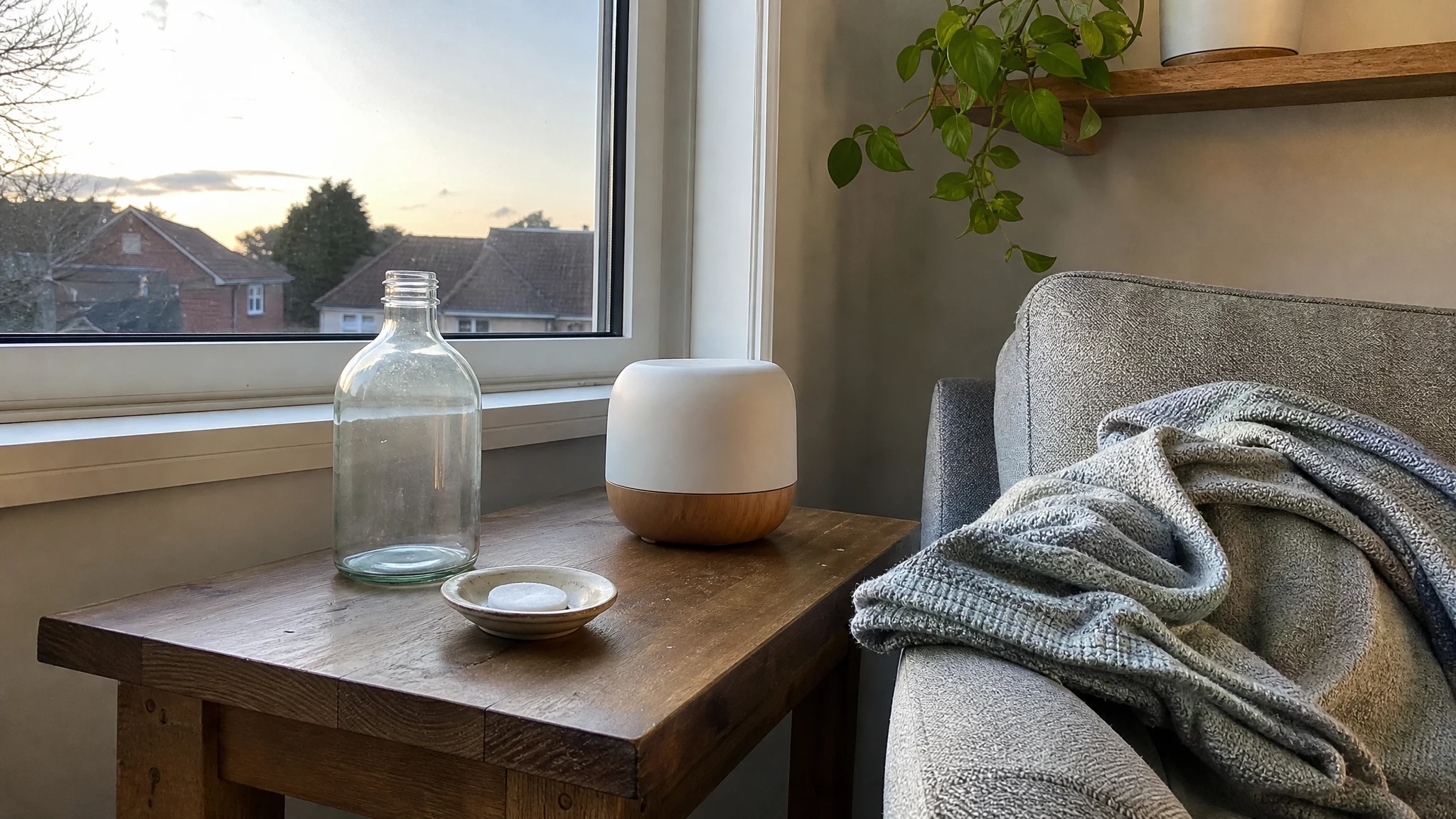
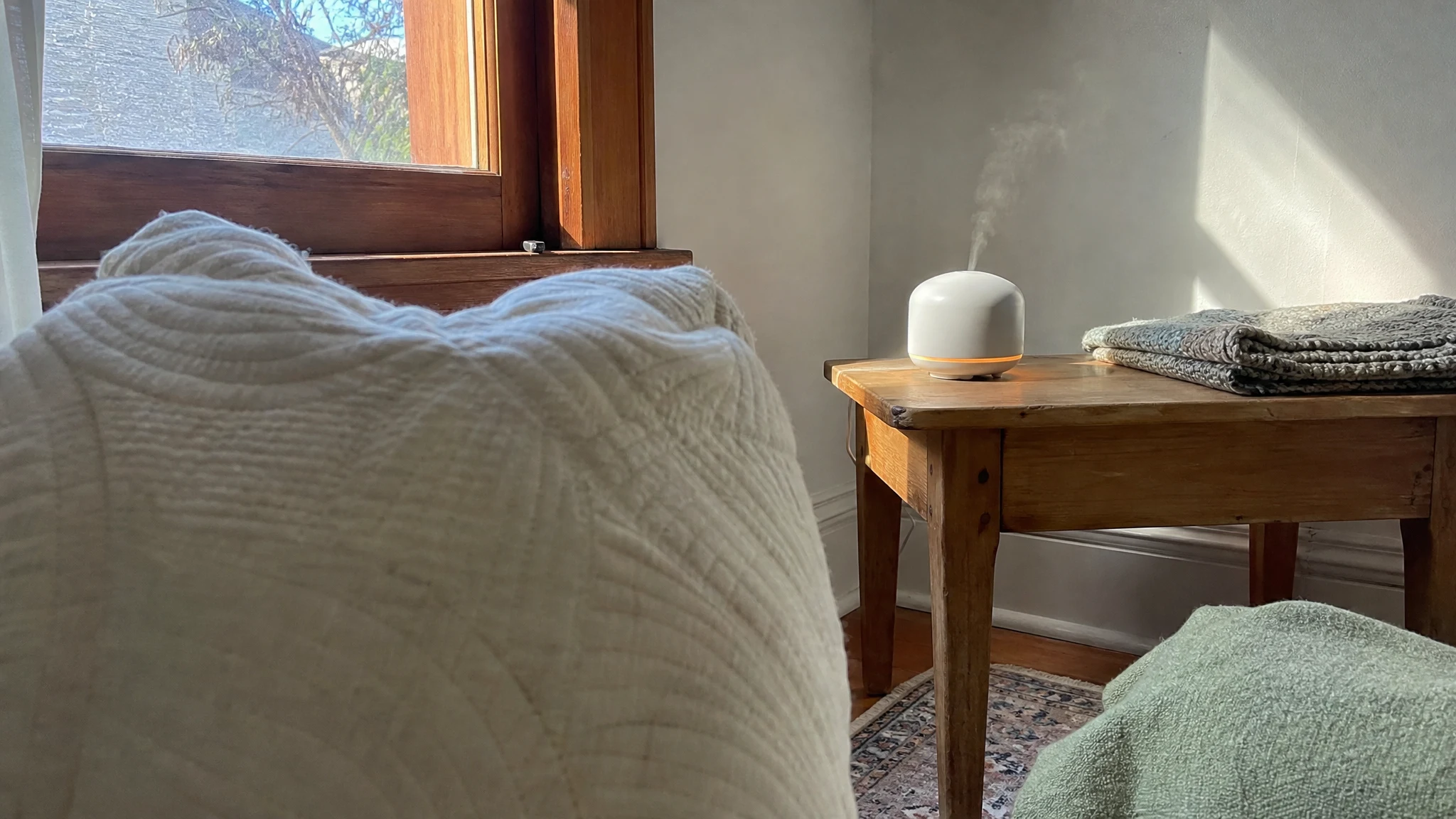
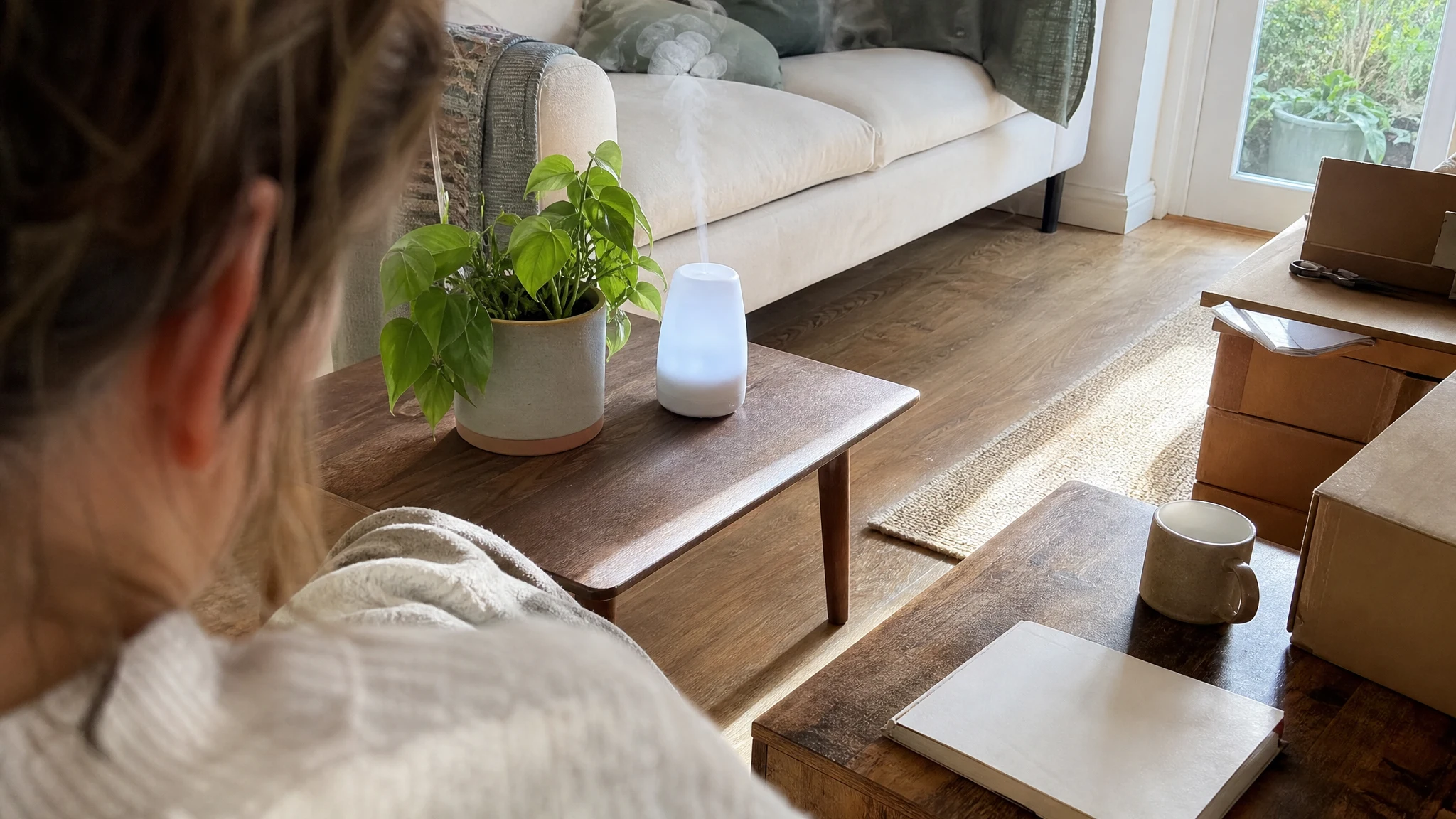
Elevated and open beats low and tucked away. A side table, a low bookshelf, or a console behind a sofa works better than the floor, because mist that settles near floor level has nowhere to go but down into carpet fibers. Keep the diffuser a foot or two off any wall and out from behind curtains or large furniture — those surfaces block the mist before it has a chance to mix into the room's air. If the room gets direct afternoon sun on one side, skip that spot: citrus-heavy oils like the bergamot peel oil in a lavender-bergamot-chamomile blend oxidize faster with heat and UV exposure, which is well documented in reviews of essential oil stability such as Turek and Stintzing's 2013 paper in Comprehensive Reviews in Food Science and Food Safety. A warm windowsill will shorten how long a bottle of oil smells the way it's supposed to.
If the living room has a ceiling fan, running it on the lowest setting while the diffuser works nearby does more for even scent distribution than moving the diffuser itself from spot to spot.
Ready to try Calm Essential Oil Blend?
Sold in sizes from 0.5 oz to 16 oz, lab-tested and shipped fast.
Shop Calm Essential Oil BlendIn an Office
A lot of generic advice says to tuck a diffuser into a corner of the desk for ambiance. That's usually the worst spot, for the same reason corners are bad in a living room — air barely moves there, so the scent pools right around the diffuser instead of filling the room. A better spot is on an open shelf or credenza a few feet from the desk, ideally somewhere air from an HVAC vent or an open window will pass by it.
Shared offices need a different kind of judgment call than a living room does. Survey-based research by Anne Steinemann, published in Air Quality, Atmosphere & Health (2016), found that fragranced products — including diffused essential oils — are a documented trigger for headaches and breathing difficulty in a meaningful share of people, including those with asthma, even when the scent itself is generally considered pleasant. If you share a workspace, that's worth factoring in before diffusing continuously at a shared desk: a smaller diffuser running for shorter stretches, positioned closer to just your own seat, respects the fact that not everyone in the room chose to be around the scent.
What Commonly Goes Wrong
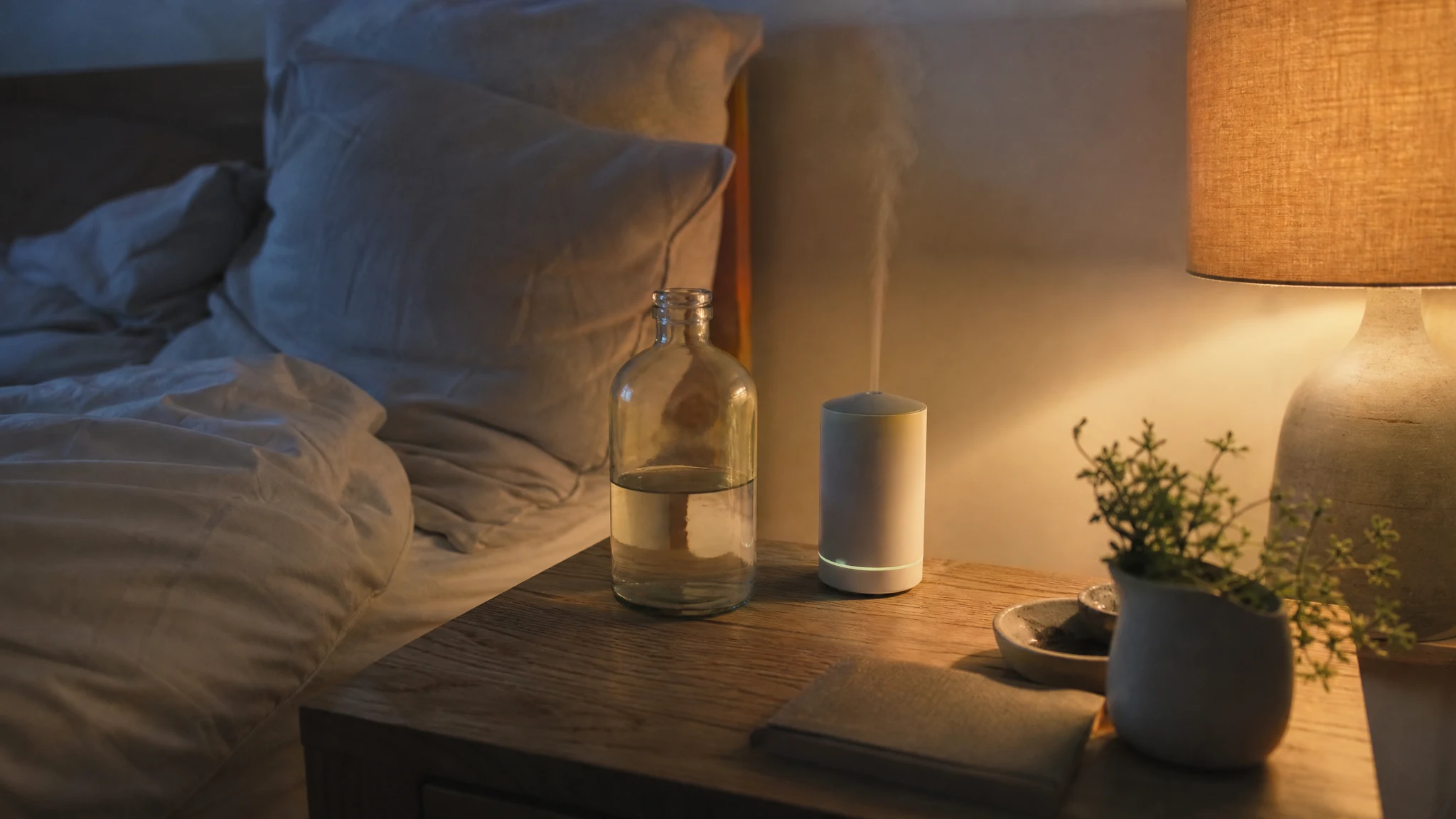
Three habits undercut even a well-placed diffuser. Running it continuously all day builds up a flat, unchanging background smell that people in the room stop noticing within an hour or two — the nose adapts quickly to steady exposure. Setting it directly on top of a wood surface without a mat or tray can leave a water ring from the mist runoff. And placing it close to computers, routers, or other electronics isn't a great idea; ultrasonic diffusers put a surprising amount of moisture into the air immediately around them.
Checking That It's Actually Working
Walk the room about fifteen minutes after starting the diffuser. You're checking for a scent that's present but not identifiable as coming from one specific point — that's the sign air is actually distributing it rather than it pooling. If you can still point straight at the diffuser and say "that's where it's strongest, and nowhere else smells like anything," the airflow in that spot isn't doing its job, and it's worth trying a shelf or table a few feet away before assuming the blend itself is too light.
When to Skip Diffusing
Cats deserve particular caution with any diffused essential oil. Their livers process certain aromatic compounds differently than ours do, largely because they have limited capacity for a liver process called glucuronidation, as described in feline pharmacology research by Michael Court (Veterinary Clinics of North America: Small Animal Practice, 2013). If cats share the space, ask a veterinarian before running a diffuser there regularly, rather than assuming a pleasant scent is automatically fine for them too.
It's also worth noting that this caution applies specifically to diffusing, where the oil is inhaled rather than touching skin. If you ever use our Calm Essential Oil Blend stirred into an unscented lotion instead of a diffuser, keep in mind that cold-pressed bergamot peel oil contains compounds called furocoumarins, which can make skin more reactive to sun exposure after topical contact — a phototoxic effect confirmed in testing by Kejlová and colleagues (Toxicology in Vitro, 2010). That's a topical consideration, not a diffuser one, but it's the kind of detail worth knowing if you use the same bottle both ways. Anyone pregnant, nursing, or managing a respiratory condition like asthma should run questions about regular diffuser use past their own doctor rather than general guidance like this.
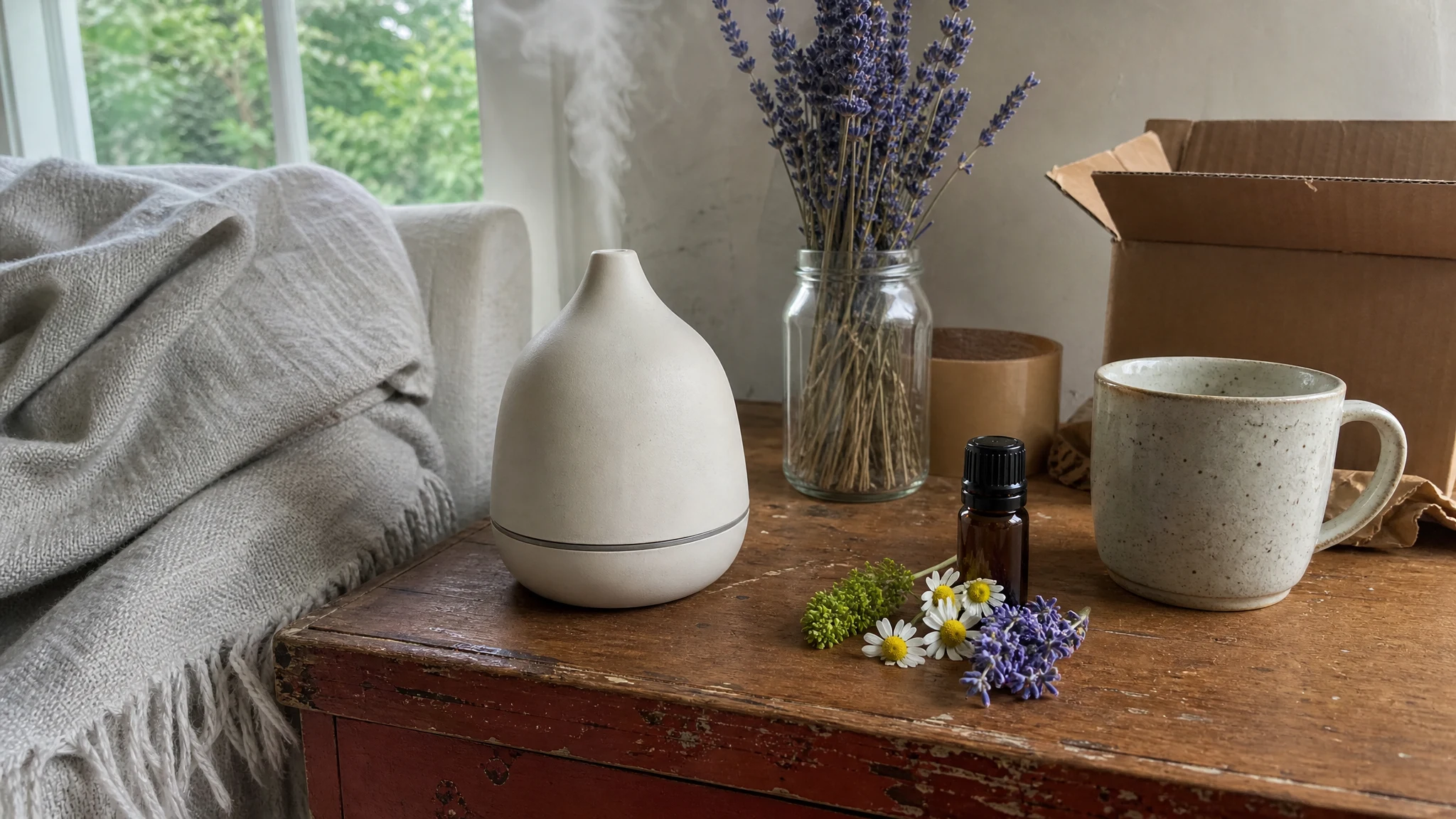
Lavender, chamomile, and bergamot together read as rounded and herbaceous rather than sharp — the kind of blend that sits in the background of a room instead of announcing itself, which is exactly what makes good placement matter so much. Get the airflow right and a small amount goes a long way; get it wrong and even a well-made blend will seem like it's not doing much of anything. If you're curious about pairing scents, it pairs well with cedarwood, vanilla, or sandalwood in a diffuser blend, and we cover more combinations like that over at our other articles.
Frequently Asked Questions
Why doesn't adding more oil make the scent travel farther?
It doesn't, because more oil just creates a denser mist in the same small radius rather than one that spreads further. The article explains that distance depends on ambient air movement, not oil concentration. If scent isn't reaching across the room, the fix is relocating the diffuser, not adding more drops.
Where should a diffuser go in a living room?
An elevated, open surface works best, such as a side table, low bookshelf, or console behind a sofa. The article recommends keeping it a foot or two off the wall and away from curtains or large furniture, since mist near the floor settles into carpet instead of circulating.
Why avoid sunny spots when diffusing a lavender-bergamot-chamomile blend?
Direct afternoon sun and heat speed up oxidation of citrus-heavy oils like bergamot peel oil, per research cited from Turek and Stintzing's 2013 stability review. The article notes this shortens how long a bottle smells the way it's supposed to, so a warm windowsill is worth skipping.
Is it safe to diffuse essential oils around cats?
The article urges particular caution, since cats process aromatic compounds differently due to limited glucuronidation capacity, as described in feline pharmacology research by Michael Court. It recommends asking a veterinarian before running a diffuser regularly in a space cats share, rather than assuming a pleasant scent is fine for them.
How can I tell if my diffuser placement is actually working?
Walk the room about fifteen minutes after starting it and check whether the scent feels present throughout rather than traceable to one spot. If you can still point to the diffuser as the only place with any smell, the article suggests trying a shelf or table a few feet away.
Is it okay to run a diffuser all day in a shared office?
The article advises against it, since continuous use builds a flat background smell people stop noticing within hours, and cited research by Anne Steinemann found fragranced products can trigger headaches or breathing issues in some people. It suggests a smaller diffuser running shorter stretches near just your own seat.