 Benefits & Uses
Scenting Unscented Body Lotion at Home: A Careful Approach to Adding a Calming Blend
Unscented lotion looks like a blank canvas, and that's exactly why people reach for it. But a lotion isn't air, and it doesn't take fragrance the way a diffuser or a candle does. Add essential oil to it the same way you'd add it to a room mist, and you can end up with a bottle that separates, smells faint within a week, or irritates skin that a diffuser blend never would have touched. Before mixing anything into a tub of lotion, it helps to understand why lotion behaves differently, and where this particular blend needs a bit more respect than most.
Table of Contents
Key Takeaways
- Unscented lotion is an oil-in-water emulsion that can separate if too much oil is added.
- Cold-pressed bergamot oil contains furocoumarins that can cause phototoxic skin reactions after sun exposure.
- A safe dilution is roughly 6-12 drops of essential oil per ounce of lotion.
- Chamomile belongs to the Asteraceae family, risking reactions in ragweed-sensitive people.
- A 24-48 hour forearm patch test is recommended before applying scented lotion broadly.
Why lotion isn't just scented air
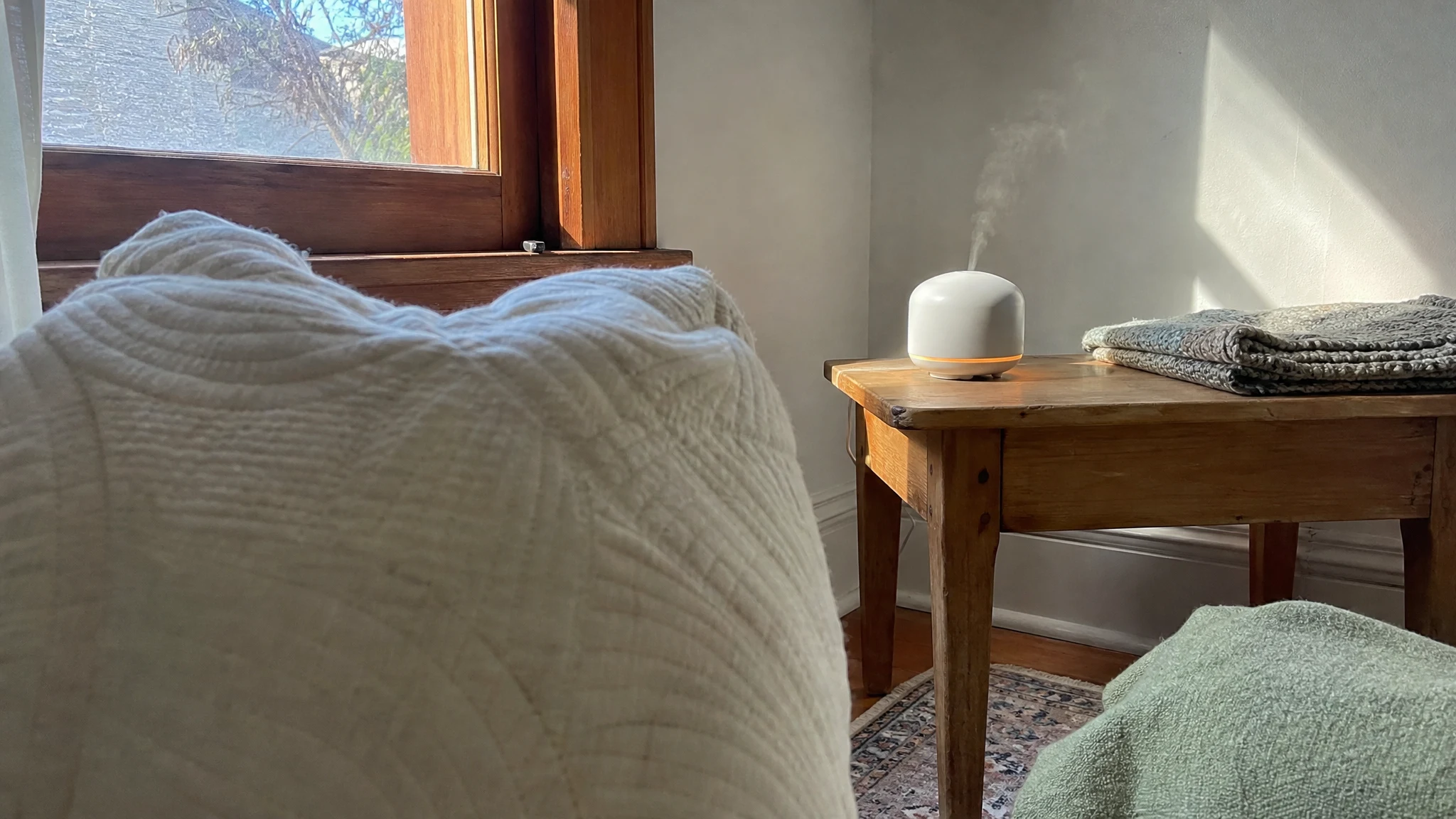
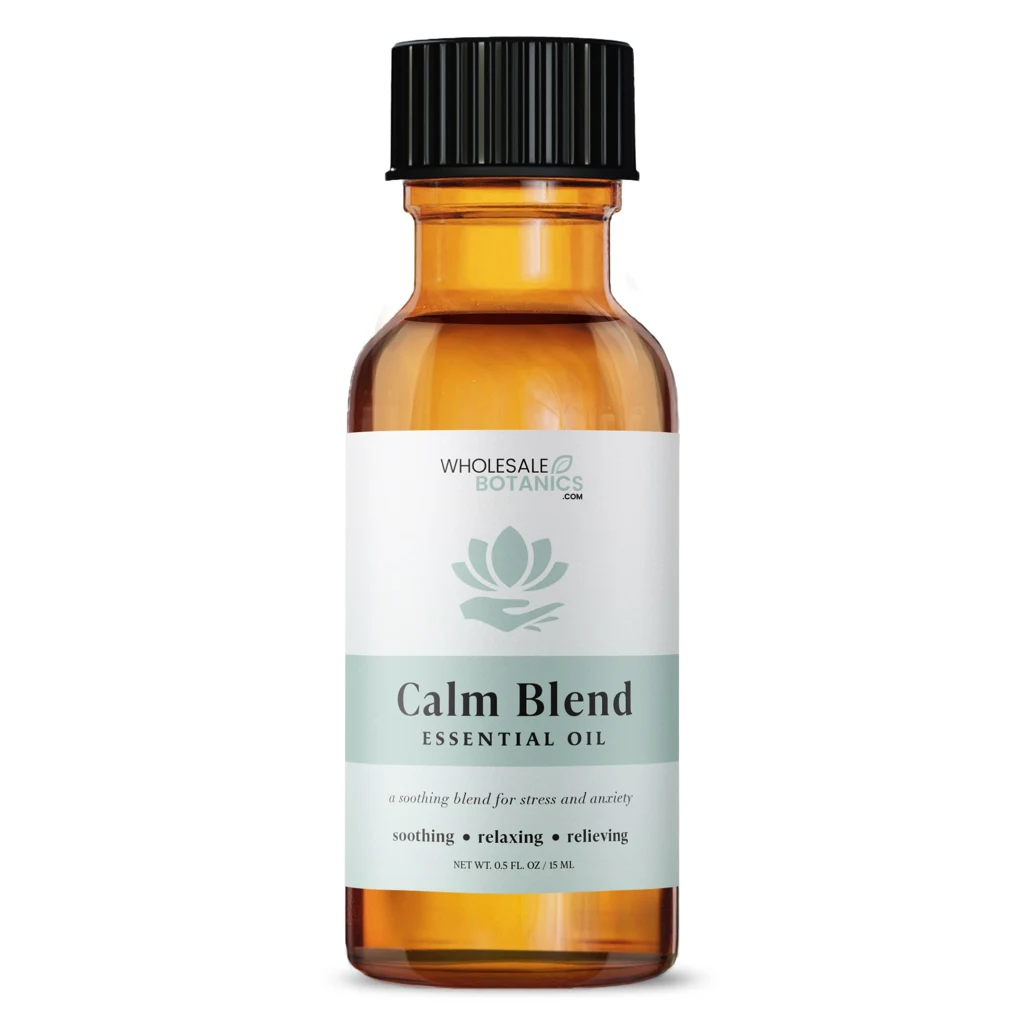
Unscented body lotion is an oil-in-water emulsion: water, emollients, and an emulsifier holding tiny droplets of oil suspended in a mostly-water base. That structure is stable at the ratio the manufacturer formulated it at, not at whatever ratio you decide to pour in. Essential oils are concentrated, oil-soluble, and often slightly acidic, and dumping too much into a jar can overwhelm the emulsifier, causing the lotion to thin out, separate, or feel greasy on application. This is a different problem from scenting a candle or a diffuser blend, where there's no emulsion to protect and no skin contact to think about — which is also why a blend like our Calm Essential Oil Blend (see it on our shop page) reads as rounded and pleasant in a diffuser but needs a completely different level of caution once it's headed for skin.
The ingredient that actually changes the calculation: bergamot
Most advice about scenting lotion at home treats all essential oils as interchangeable, and that's where it goes wrong with this blend specifically. Cold-pressed bergamot peel oil (Citrus bergamia) contains furocoumarins, compounds that react with UV light on skin and can cause phototoxic reactions — redness, burning, or dark patches at the site of application after sun exposure. The International Fragrance Association sets a specific standard limiting bergapten (the main furocoumarin in bergamot) in leave-on skin products for exactly this reason (IFRA, Standards on Furocoumarins). Robert Tisserand and Rodney Young address this directly in their reference text for safe essential oil use, noting that expressed bergamot oil carries a real phototoxic risk on skin left unwashed and exposed to sunlight, and recommending it be avoided or kept well below typical dilution levels in leave-on products (Tisserand & Young, Essential Oil Safety, 2nd ed., 2014). This doesn't mean skip bergamot; it means plan around it — apply scented lotion to areas that won't see direct sun, or apply it at night, rather than slathering it on arms and shoulders before a beach day.
Deciding how much to use
For a leave-on body product, Tisserand and Young's general guidance for adult skin application sits around 1–2% essential oil by volume for most oils, and lower when a phototoxic ingredient is in the mix (Tisserand & Young, 2014). In practical terms, that's roughly 6–12 drops of essential oil per ounce (about 30 ml) of lotion, and we'd lean toward the lower end of that range given the bergamot content here, especially for a first batch. There's no benefit to going stronger — past a certain point, you're not adding more scent, you're just adding more oil for the emulsifier to fight.
Ready to try Calm Essential Oil Blend?
Sold in sizes from 0.5 oz to 16 oz, lab-tested and shipped fast.
Shop Calm Essential Oil BlendMixing it in without wrecking the lotion
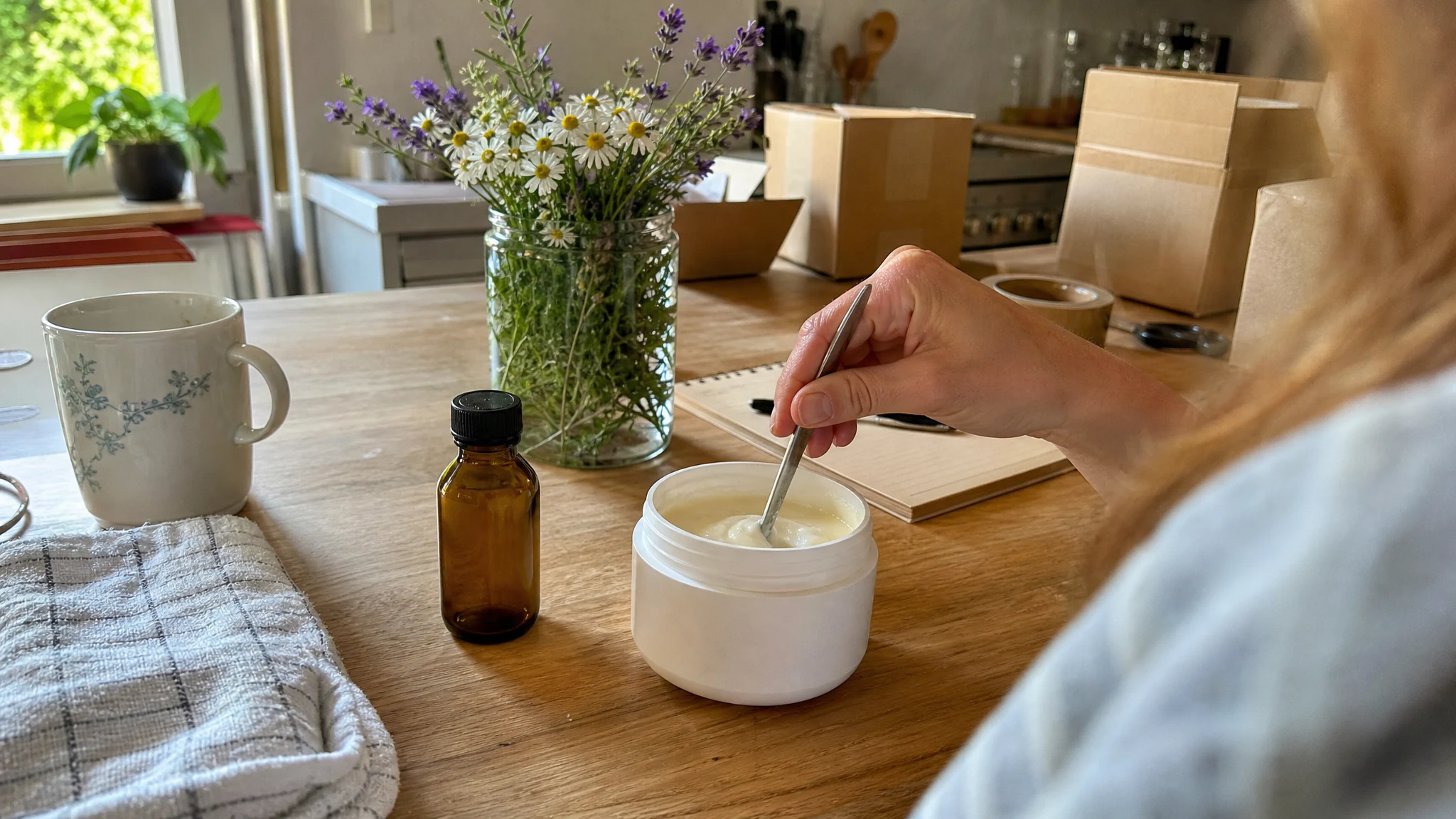
Work in small batches rather than scenting a whole bottle at once. Measure out a few ounces of unscented lotion into a separate small container, add your drops, and stir thoroughly with a spoon or small whisk rather than shaking — shaking can introduce air and make separation more likely. Let it sit for a few minutes and stir again before deciding whether it needs more. If the lotion starts to look thin, watery, or oily on top, you've added too much oil for that batch; it's easier to start a fresh small batch than to try to rescue one that's already breaking.
Patch test before you commit the jar
Apply a small amount of the finished lotion to the inside of your forearm and leave it for 24 to 48 hours, watching for redness, itching, or irritation, a standard precaution dermatologists recommend before using any new topical product broadly (American Academy of Dermatology, aad.org). This matters more than usual here because chamomile (Matricaria chamomilla) belongs to the Asteraceae (daisy/ragweed) plant family, and people with ragweed or daisy-family sensitivities can react to it even when they tolerate other florals fine. If you know you're sensitive to ragweed, chrysanthemums, or related plants, that's worth factoring in before you scale up from a patch test to a full jar.
When this isn't the right project
Scenting your own lotion is a reasonable weekend project for someone comfortable measuring carefully and patch testing patiently, but it's not for everyone. Skip it, or check with a dermatologist first, if you have very reactive or compromised skin, if you're pregnant or scenting a product for a young child, or if you spend significant time in direct sun right after applying body lotion and can't adjust that habit. It's also simply not worth the effort if you just want a pleasant scent in the room rather than on your skin — this blend does that job well on its own in a diffuser, and the fragrance carries nicely into melted soap base or candle wax without any skin-contact math at all (more scenting ideas are in our other articles). Lotion-scenting is the fussiest of the ways to use this blend, which is exactly why it's worth doing carefully or not at all.
Frequently Asked Questions
How many drops of essential oil should I add per ounce of lotion?
The article suggests roughly 6-12 drops of essential oil per ounce (about 30 ml) of lotion, based on Tisserand and Young's 1-2% guidance for leave-on products. Given this blend's bergamot content, it recommends leaning toward the lower end of that range, especially for a first batch.
Why does bergamot oil need extra caution on skin?
Bergamot contains furocoumarins, compounds that react with UV light and can cause phototoxic reactions like redness, burning, or dark patches after sun exposure. The article notes IFRA limits bergapten in leave-on products for this reason, and recommends applying scented lotion to areas that avoid direct sun, or at night.
What should I do if the lotion starts to separate while mixing in oil?
If the lotion looks thin, watery, or oily on top, too much oil has been added for that batch. The article advises starting a fresh small batch rather than trying to rescue one that's already breaking, since there's no benefit to adding more oil than the emulsifier can hold.
Who should skip scenting their own lotion?
The article says to skip it, or check with a dermatologist, if you have very reactive or compromised skin, are pregnant, are scenting a product for a young child, or spend significant time in direct sun after applying lotion and can't adjust that habit.
Why does chamomile in the blend matter for a patch test?
Chamomile belongs to the Asteraceae, or daisy/ragweed, plant family, and people with ragweed or daisy-family sensitivities can react to it even if they tolerate other florals. The article recommends factoring this in before scaling up from a patch test to a full jar.
Are there ways to use this blend that avoid skin-contact concerns entirely?
Yes, the article notes the blend works well in a diffuser and its fragrance carries nicely into melted soap base or candle wax without any skin-contact math. It calls lotion-scenting the fussiest use of the blend compared to these other methods.