 Benefits & Uses
Scenting Your Gym Bag and Yoga Mat Space: Keeping a Calming Aroma with Scented Cotton Pads
A gym bag is basically a sealed box you fill with sweat-soaked synthetic fabric and then zip shut for hours at a time. No wonder it smells the way it does. Yoga mats aren't much better — most are closed-cell or open-cell foam, rubber, or PVC, and all three of those materials are porous enough at a microscopic level to absorb odor and hang onto it. Understanding that is really the starting point for fixing it, because it explains why a quick spritz of room spray before class never seems to last.
Table of Contents
Key Takeaways
- Gym bags and foam/rubber yoga mats trap odor because they're sealed, porous, and lack airflow.
- A cotton pad works better than a spray in a closed bag since no moisture reaches the gear.
- The blend's scent shifts over time as bergamot fades first, then lavender and chamomile remain.
- Use 4 to 6 drops on an uncoated cotton pad and keep it off the mat's surface.
- Pads usually lose noticeable scent within two to three weeks and should then be replaced.
Why a closed bag behaves differently than an open room
In a living room, a diffuser works by constantly pushing scented vapor into moving air that's also escaping through doors, vents, and gaps. A gym bag has none of that air exchange. Once it's zipped, whatever scent is inside stays concentrated in a small, still volume — which is exactly the condition that lets a passive scent source work far better than it would in open air. It's also exactly the condition where a liquid spray is a bad idea: dampness trapped against foam or rubber with no airflow to dry it is a reasonable setup for mildew, not a fresher-smelling mat.
That's the real case for a scented cotton pad over a spray or a plug-in diffuser for this particular use. A pad holds the oil in the cotton fibers and lets it evaporate slowly into the closed space around it, with no moisture reaching your gear and no electricity required.
The part most people don't expect: the scent changes over the two weeks you're smelling it
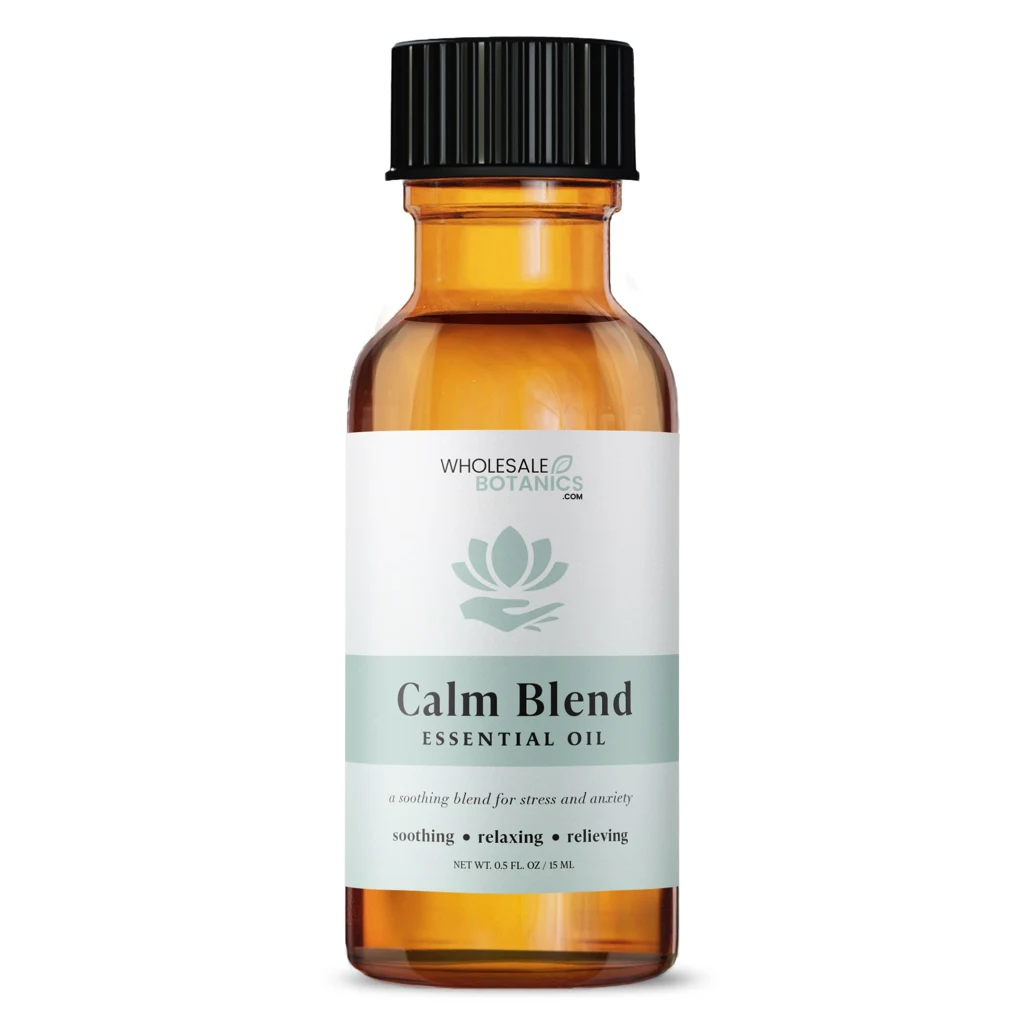
Here's where I'd push back on the idea that a scent in a bag just "fades evenly" until it's gone. It doesn't. Our Calm Essential Oil Blend is built from cold-pressed bergamot peel oil, steam-distilled lavender, and steam-distilled chamomile, and those three materials don't evaporate at the same speed. Bergamot is a classic top note — light, volatile, and quick to leave a surface. Lavender sits in the middle, and chamomile's heavier, slightly waxy character makes it one of the slower materials to disperse. Perfumery texts that classify ingredients this way (Tisserand & Young, Essential Oil Safety, 2nd ed., Elsevier, 2013) describe exactly this kind of staggered volatility across top, middle, and base materials.
Practically, that means the pad you tucked into your bag on day one will smell brighter and more citrus-forward for the first few days, then settle into something softer and more floral-herbaceous as the bergamot thins out and the lavender and chamomile carry the scent on their own. If you've ever wondered why a scented sachet seems to "change" partway through its life, that's not your imagination — it's just chemistry, and it's one of the more interesting things about using a real botanical blend instead of a single synthetic fragrance note that's engineered to smell identical on day one and day thirty.
Ready to try Calm Essential Oil Blend?
Sold in sizes from 0.5 oz to 16 oz, lab-tested and shipped fast.
Shop Calm Essential Oil BlendHow to actually do this
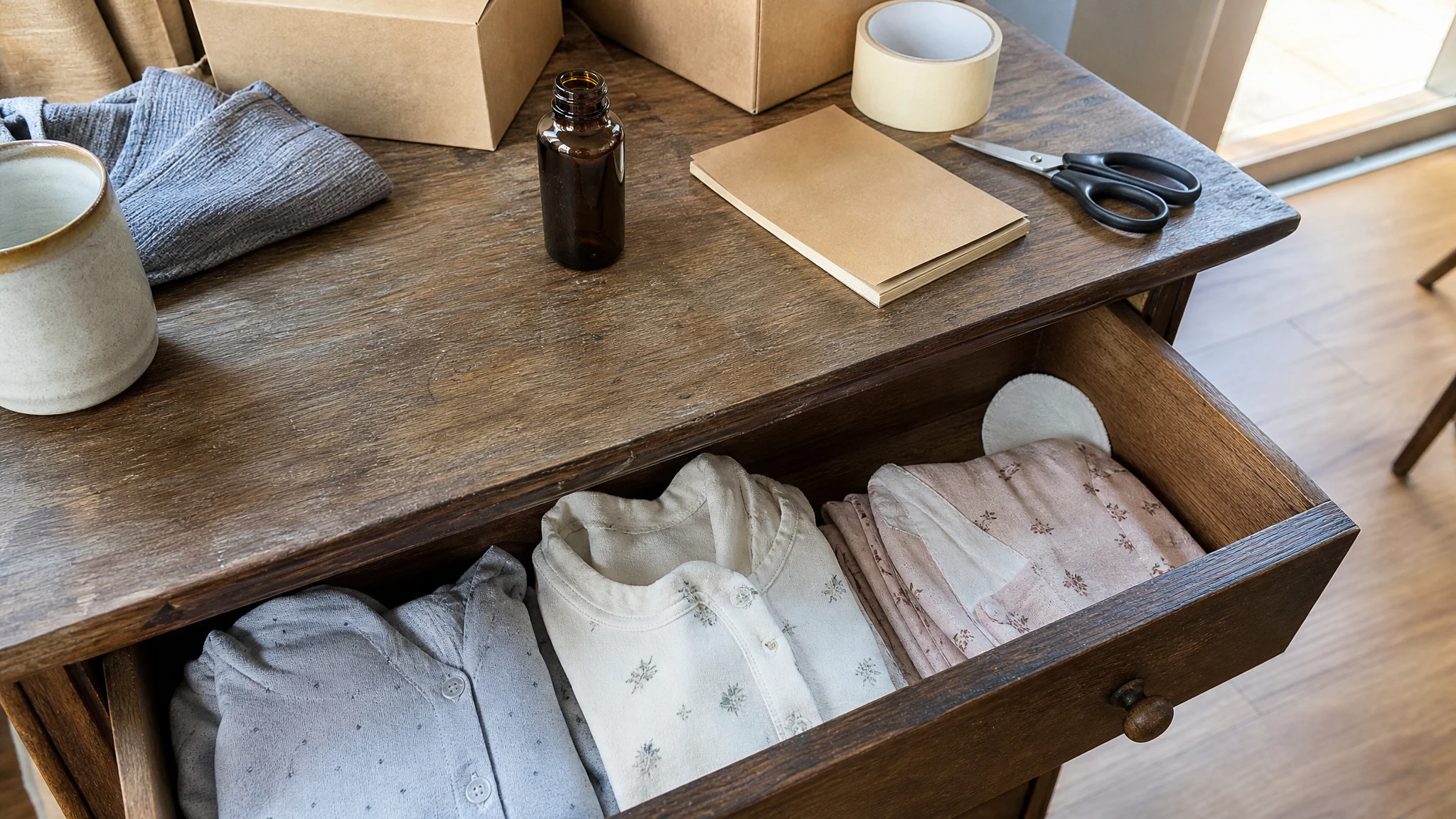
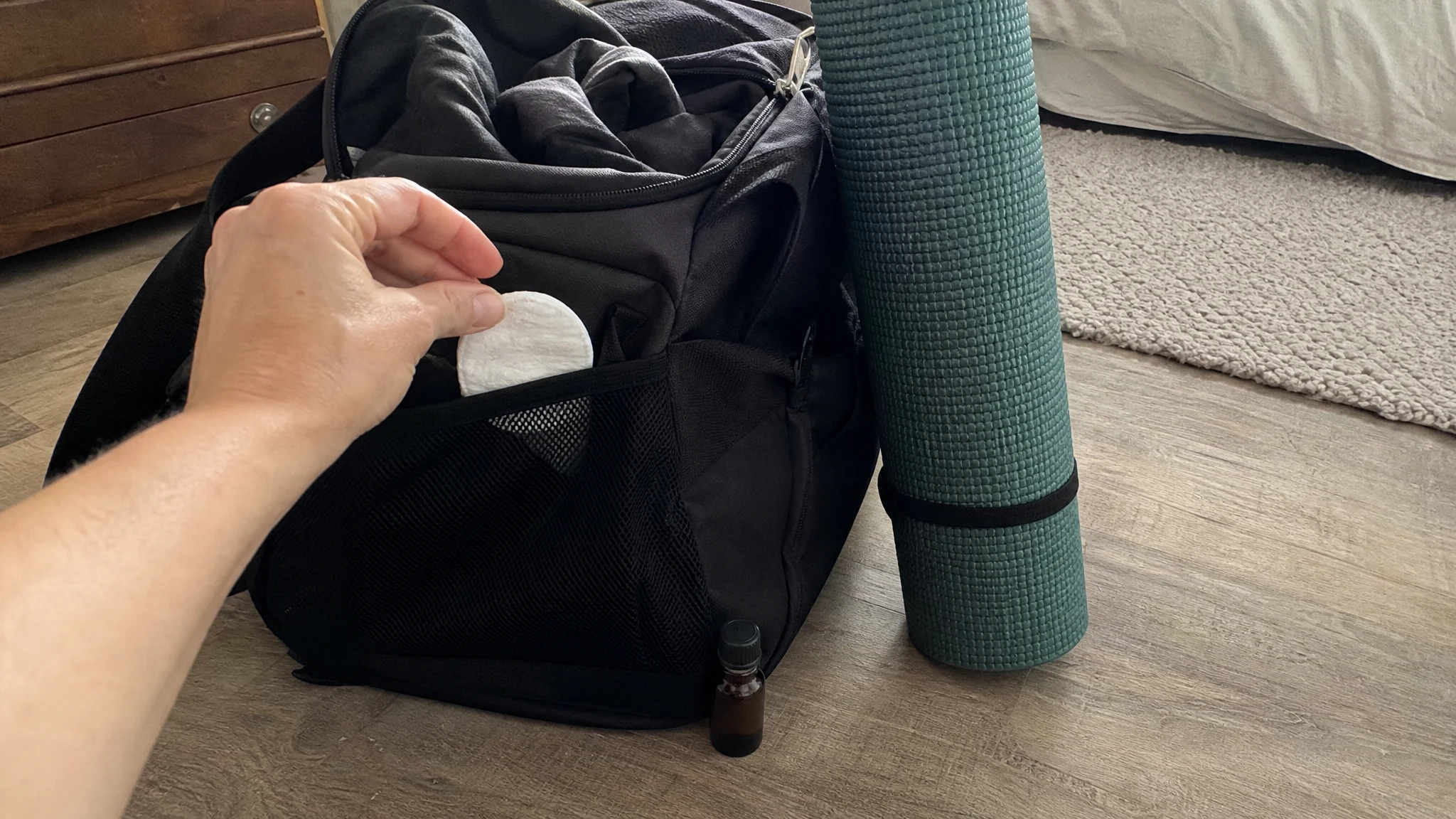
- Use a plain, uncoated cotton pad or cosmetic round — nothing with a plastic backing, which won't absorb oil evenly.
- Add 4 to 6 drops of the blend and let it sit for a minute so the oil spreads through the fibers instead of pooling on the surface.
- Tuck it into a mesh pocket, a zippered interior pocket, or a small cloth bag inside your gym bag — somewhere it has airflow but isn't resting directly against the mat.
- For the mat itself, keep the pad in the strap or the carrying pocket rather than letting it touch the mat's surface directly.
That last point matters more than it sounds. Bergamot peel oil is roughly a third to nearly half d-limonene, the compound responsible for that bright citrus snap, and d-limonene is a genuinely effective solvent — it's the same compound used in citrus-based degreasers and rubber cleaners (National Center for Biotechnology Information, PubChem Compound Summary for Limonene, pubchem.ncbi.nlm.nih.gov). Direct, repeated oil contact with foam or rubber isn't something you want on the mat surface itself. Keeping the oil on a cotton pad, off the mat, is what lets you get the scenting benefit without any risk to the material.
Where this isn't the right fit
If you keep your bag in a shared gym locker or carry it on public transit, consider that not everyone wants to smell lavender and bergamot on a crowded train — fragrance sensitivity is real for some people, and a strong scent in a shared space is worth being thoughtful about. If a cat has access to the bag or the room where it sits, be aware that cats lack some of the liver enzymes most mammals use to process certain plant compounds, including ones found in essential oils, and the ASPCA Animal Poison Control Center advises keeping essential oils away from areas cats can reach or chew (ASPCA, aspca.org). And if you're handling the pad with bare hands and then heading straight out to an outdoor class, give your hands a wash first — cold-pressed bergamot oil contains bergapten, a compound known to increase skin's sensitivity to UV light (Tisserand & Young, 2013), and it's meant for scenting fabric here, not for direct, unwashed skin contact before sun exposure.
One more honest limit: this is a scenting method, not a cleaning one. A cotton pad will keep your bag smelling pleasant between washes, but it does nothing to actually clean sweat or bacteria out of the mat or the bag's lining. Washing your mat according to the manufacturer's instructions and laundering bag liners when needed is still the part that handles hygiene — the pad is just handling the smell in between.
Knowing when to refresh it
There's no fixed expiration date here, since it depends on how often the bag gets opened and how warm it's stored. A reasonable check is simple: press the pad between two fingers and see if you still get a noticeable waft of scent. Once it's gone faint — usually somewhere around two to three weeks for most people — swap in a freshly dosed pad rather than adding more drops to the old one, since a pad that's absorbed sweat or lint from the bag won't hold a new application cleanly. If you want to repurpose the same blend elsewhere once you're restocking, it also works well stirred into unscented lotion, dropped into a witch hazel room spray, or added to melted candle wax or soap base — all listed on the Calm Essential Oil Blend product page, alongside more ideas for layering it with cedarwood, vanilla, or sandalwood in a diffuser.
For more ways to work scent into daily routines like this one, the rest of our articles cover other everyday uses worth trying.
Frequently Asked Questions
Why shouldn't I just spray the inside of my gym bag?
Because trapped moisture with no airflow can lead to mildew rather than a fresher smell. A closed bag has no air exchange to dry a liquid spray, so dampness lingers against foam or rubber. A scented cotton pad avoids this since the oil stays in the cotton fibers and evaporates slowly without adding moisture.
Can I let the scented pad touch my yoga mat directly?
No, the pad should stay in a strap or pocket rather than resting on the mat's surface. Bergamot oil is rich in d-limonene, a solvent compound also used in degreasers, and repeated direct contact with foam or rubber isn't recommended. Keeping the pad off the mat lets you get the scent without risking the material.
How often should I refresh the scented pad?
Roughly every two to three weeks for most people, though it depends on how often the bag is opened and how warm it's stored. Check by pressing the pad between two fingers to see if it still gives off a noticeable scent. Swap in a freshly dosed pad rather than adding more oil to the old one.
Does the scent of the pad stay the same the whole time?
No, it changes because the three oils evaporate at different speeds. Bergamot is light and volatile and fades first, giving a brighter citrus note early on, while lavender and chamomile linger longer, leaving a softer, floral-herbaceous scent later. This staggered evaporation reflects top, middle, and base note behavior in perfumery.
Does using a scented pad clean my gym bag or mat?
No, the article is clear this is a scenting method, not a cleaning one. The pad keeps the bag smelling pleasant between washes but does nothing to remove sweat or bacteria from the mat or bag lining. Washing the mat per manufacturer instructions and laundering bag liners is still needed for hygiene.
Are there any safety concerns with this essential oil blend?
Yes, a few are noted in the article. Cats lack certain liver enzymes to process plant compounds in essential oils, so the ASPCA advises keeping oils away from areas cats can reach. Also, bergamot oil contains bergapten, which increases skin's UV sensitivity, so hands should be washed before sun exposure after handling the pad.