 Buying Guides
Floral, Citrus or Herbaceous? How to Pick a Relaxing Essential Oil Scent Profile
Stand in front of a shelf of essential oils labeled "relaxing" and you'll notice they don't smell anything alike. One is bright and sharp, almost like orange peel. Another is soft and a little powdery. A third smells like warm hay or chamomile tea gone slightly sweet. They can't all be doing the same thing to your nervous system through the same mechanism — and they aren't. That's the first thing worth untangling before you buy a bottle based on the word "relaxing" alone.
Table of Contents
Key Takeaways
- Odor-emotion associations are mostly learned through memory, not hardwired to the molecule itself.
- Lavender has the strongest research base, linked to calmness and altered sleep patterns in studies.
- Bergamot research shows shifts in mood and parasympathetic nervous system activity after aromatherapy exposure.
- Chamomile's calming reputation comes mainly from tea and topical use, with thin inhalation research.
- Bergamot's bergapten can cause phototoxic skin reactions when exposed to sunlight after application.
The real question isn't which scent is calming. It's which one your nose already trusts.
A lot of buying guides treat floral, citrus, and herbaceous as a ranked list, as if one family is objectively more soothing than the others. It isn't that simple. Smell is processed through the brain's limbic system, the same region tied closely to memory and emotion, which is why a specific scent can trigger a specific feeling almost instantly — but which feeling it triggers is largely learned, not fixed. Rachel Herz, a psychologist who has spent her career studying olfaction, has written that odor-emotion associations are shaped by experience and memory rather than being hardwired to the molecule itself (Herz, "The Role of Odor-Evoked Memory in Psychological and Physiological Health," Brain Sciences, 2016). If lavender smells like your grandmother's linen closet, it will probably relax you. If it smells like a cleaning product you associate with a bad hotel, it won't, no matter what the label says.
That doesn't mean the research on specific oils is irrelevant — it just means it describes tendencies across groups of people, not guarantees for you personally. Lavender (Lavandula angustifolia) has the deepest research base of the three families here: a small study by Moss, Cook, Wesnes, and Duckett found lavender aroma was associated with increased reports of calmness and reduced alertness compared with rosemary (International Journal of Neuroscience, 2003), and Goel, Kim, and Lao found that lavender exposure before sleep was linked to changes in nighttime sleep patterns in young adults (Chronobiology International, 2005). Bergamot has a smaller but notable body of work behind it too — Watanabe and colleagues reported shifts in mood state and parasympathetic nervous system activity after bergamot aromatherapy in a group of healthy women (Forschende Komplementärmedizin, 2015).
Chamomile is the one worth being honest about. Its reputation for calm comes almost entirely from chamomile tea and topical use, where there's a longer research history. The inhalation research specifically — chamomile as an aroma rather than a drink or a skin application — is much thinner than lavender's or bergamot's. We still include it in this blend because of what it contributes to the scent itself: a soft, apple-like warmth that rounds out the sharper top notes. Just don't expect it to be pulling the same evidentiary weight as the other two.
Why a blend, and not just one note
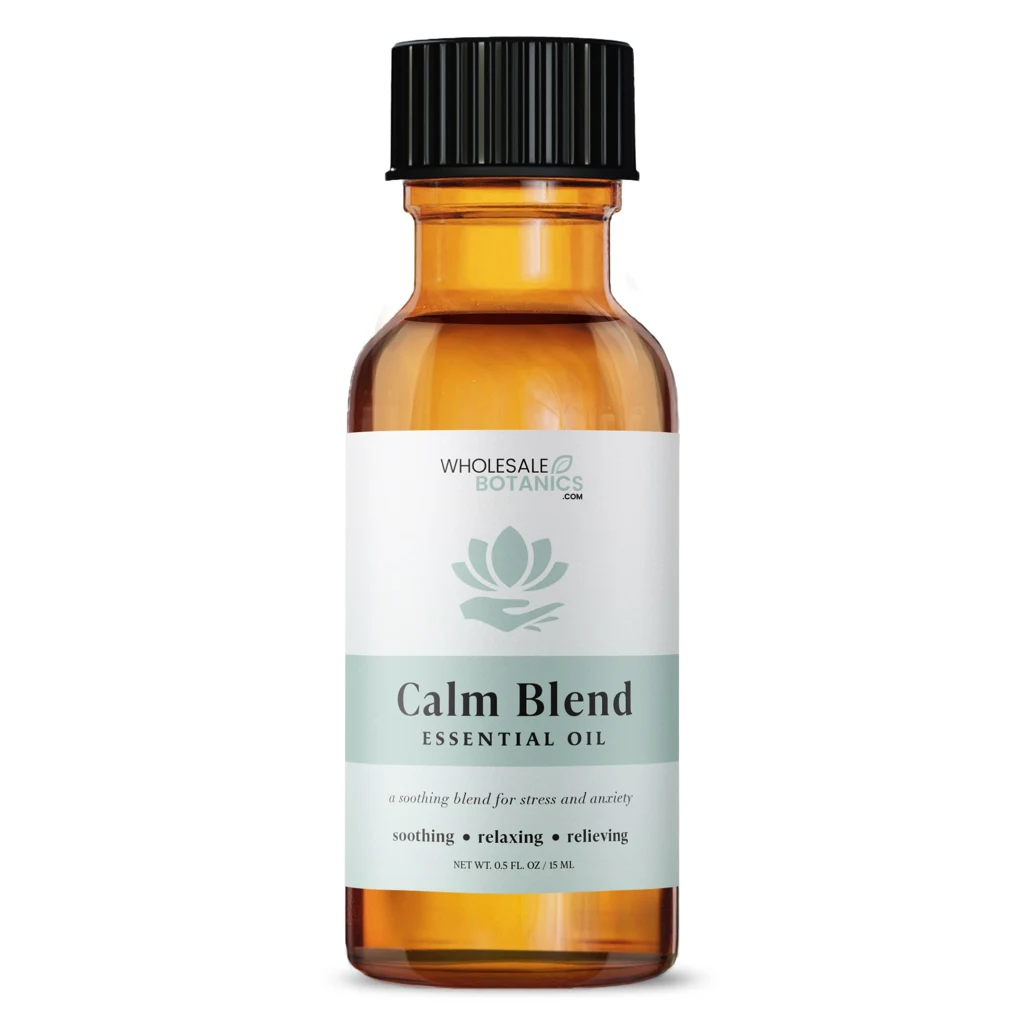
This is where perfumery structure actually matters more than most buying guides let on. Our Calm Essential Oil Blend combines steam-distilled lavender, steam-distilled chamomile, and cold-pressed bergamot peel oil in small batches, and the three don't hit your nose at the same time or in the same order. Bergamot is made of small, volatile citrus terpenes that evaporate quickly, so it's the first thing you smell — bright and a little sharp — and also the first thing to fade. Lavender's floral compounds are heavier and slower to evaporate, so they take over a few minutes in, giving the blend its soft middle. Chamomile's components are the slowest to leave the air, which is why the blend finishes on that warm, rounded note rather than cutting off abruptly.
Practically, this means a one-note oil can smell slightly flat or one-dimensional over time, because you're smelling the same molecules from start to finish. A blend built across top, middle, and base notes reads as more complex and tends to hold its shape in a room longer. If you genuinely don't know whether you respond better to citrus, floral, or herbaceous scents, a blend that spans all three is a reasonable way to hedge that bet instead of guessing at a single note.
Ready to try Calm Essential Oil Blend?
Sold in sizes from 0.5 oz to 16 oz, lab-tested and shipped fast.
Shop Calm Essential Oil BlendPutting it to use
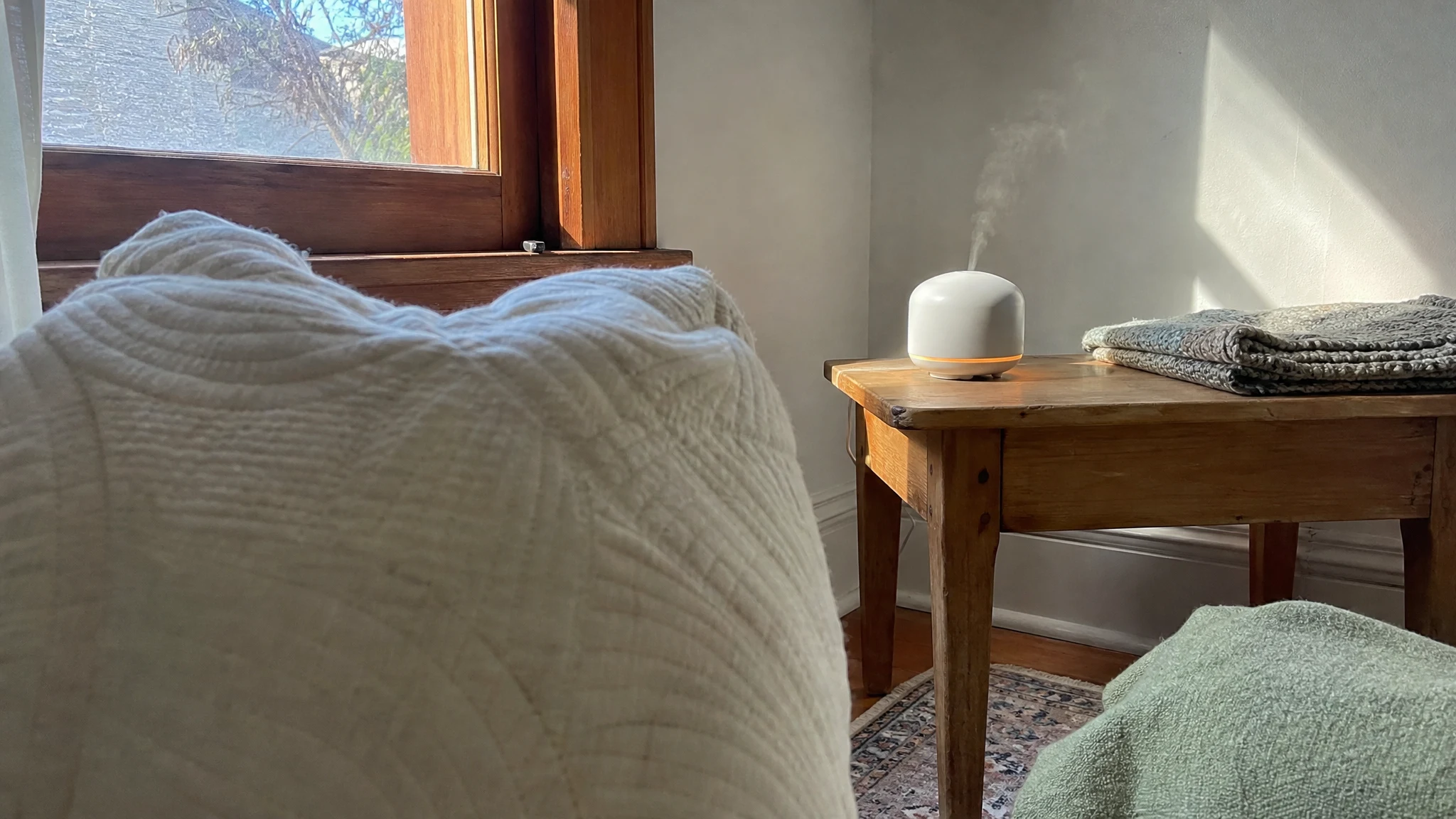
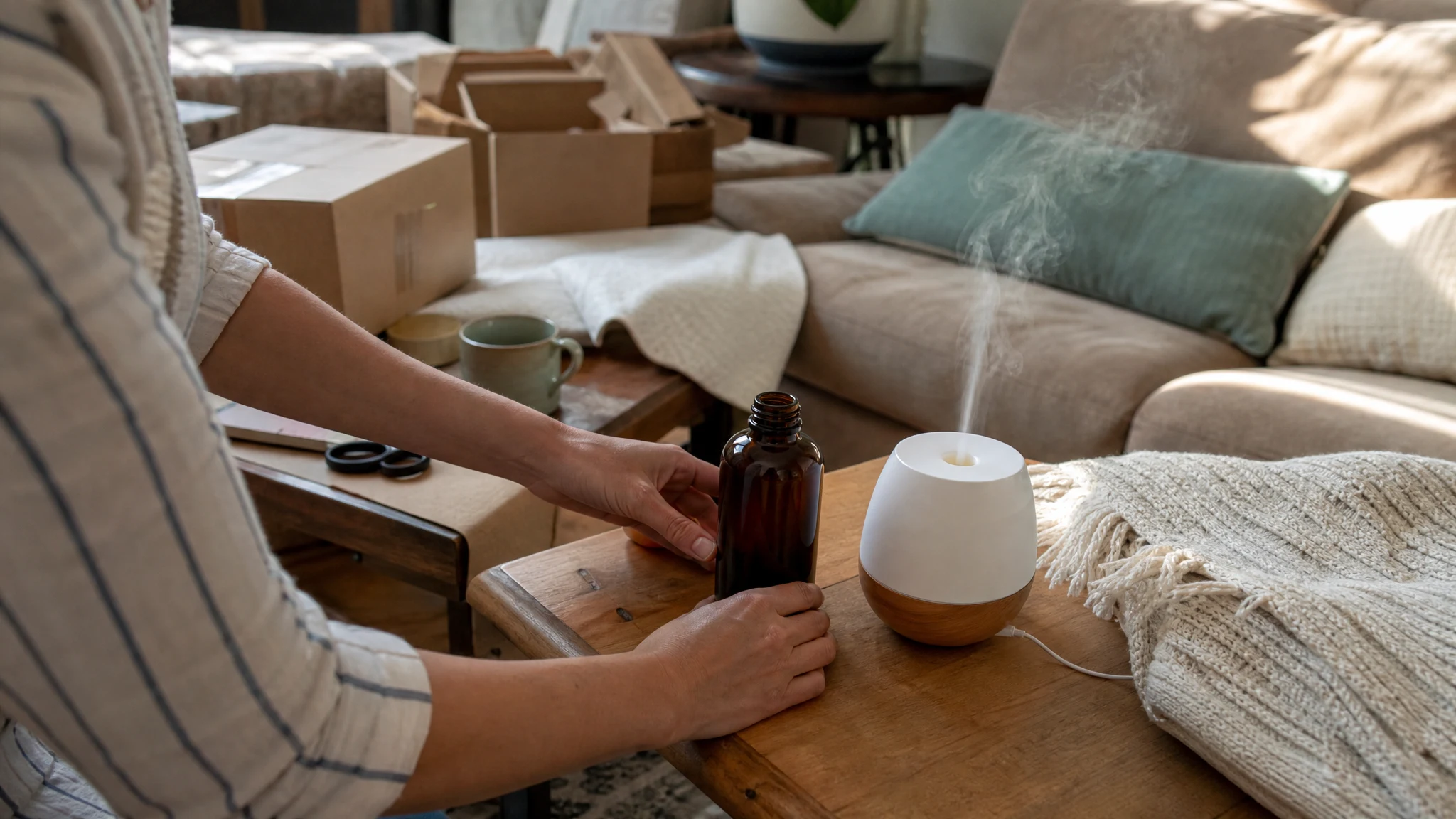
Most people who keep this blend around use it in a diffuser for everyday scenting of a living room or office, often paired with cedarwood, vanilla, or sandalwood to deepen the base. A few drops stirred into melted soap base or a batch of candle wax carries the fragrance into finished goods rather than just scenting the air. A cotton pad with a drop or two tucked into a dresser drawer or gym bag will carry the scent for weeks without any equipment at all. For a simple room mist, a few drops in a spray bottle of water and witch hazel works as a quick alternative to a diffuser — witch hazel helps the oil disperse in water instead of floating on top.
What to actually check before you use it
Cold-pressed bergamot oil naturally contains bergapten, a furanocoumarin compound known to increase skin's sensitivity to UV light when applied to skin that's then exposed to sunlight — a phototoxic reaction, not an allergy. This is well established enough that the International Fragrance Association (ifrafragrance.org) restricts how much bergamot oil can be used in leave-on skin products. If you're applying this blend to skin rather than diffusing it, keep the treated area out of direct sun for the rest of the day, or stick to diffusing and fragrancing finished goods instead.
Chamomile is also worth a second look if you have seasonal allergies. Matricaria chamomilla belongs to the Asteraceae (Compositae) family, the same plant family as ragweed, daisies, and marigolds, and contact sensitization to chamomile has been documented specifically in people with existing Compositae allergies (Paulsen, "Contact sensitization from Compositae-containing herbal remedies and cosmetics," Contact Dermatitis, 2002). A patch test on a small area of skin before broader use is a reasonable precaution for anyone in that group.
A few more plain limits: this blend is a fragrance product for scenting rooms, lotions, and finished goods, not a treatment for anxiety, insomnia, or any diagnosed condition — if you're dealing with a sleep or mood issue that's affecting your life, that's a conversation for a doctor or licensed mental health professional, not an essential oil blend. Essential oils in general are not recommended around cats, whose liver chemistry processes certain aromatic compounds differently than ours, so keep diffusers out of small or poorly ventilated rooms where pets spend most of their time. And if you're pregnant, nursing, or diffusing around infants, it's worth checking with your doctor or a certified aromatherapist before making this part of a daily routine, simply because that population hasn't been well studied for inhaled essential oil exposure.
None of that makes this a risky product to keep in the house — it just means treating it like what it is: a nicely built fragrance blend, not a medicine. Used that way, in a diffuser or worked into a candle or lotion, it does what it's built to do well.
Frequently Asked Questions
Why does this blend combine lavender, chamomile, and bergamot instead of using just one oil?
The three oils evaporate at different rates, creating top, middle, and base notes. Bergamot's citrus terpenes hit first and fade fast, lavender's floral compounds form the soft middle, and chamomile's slower components round out the finish. This layered structure reads as more complex and holds its shape longer than a single-note oil.
Is it safe to put this essential oil blend directly on skin?
Caution is needed because cold-pressed bergamot contains bergapten, which increases UV sensitivity and can cause a phototoxic reaction in sunlight. The article advises keeping treated skin out of direct sun afterward, or sticking to diffusing and scenting finished goods like soap or candles instead.
Could this blend trigger allergies?
Possibly, if you have Compositae allergies. Chamomile belongs to the Asteraceae (Compositae) family, the same family as ragweed, daisies, and marigolds, and contact sensitization has been documented in people with existing allergies to that plant family. The article recommends a patch test before broader use.
What's the best way to use this blend at home?
Most people diffuse it for everyday scenting of a living room or office, often pairing it with cedarwood, vanilla, or sandalwood. It can also be stirred into melted soap base or candle wax, placed on a cotton pad in a drawer or gym bag, or added to a water-and-witch-hazel spray bottle for a room mist.
Does research prove lavender or bergamot will relax everyone who smells them?
No, the article is clear that studies describe tendencies across groups, not personal guarantees. Since smell is processed through the brain's limbic system and shaped heavily by individual memory and experience, the same scent can relax one person and do nothing for another.