 DIY Recipes
Cedarwood, Vanilla or Sandalwood: Which Partner Best Suits a Relaxing Calm Blend in Your Diffuser?
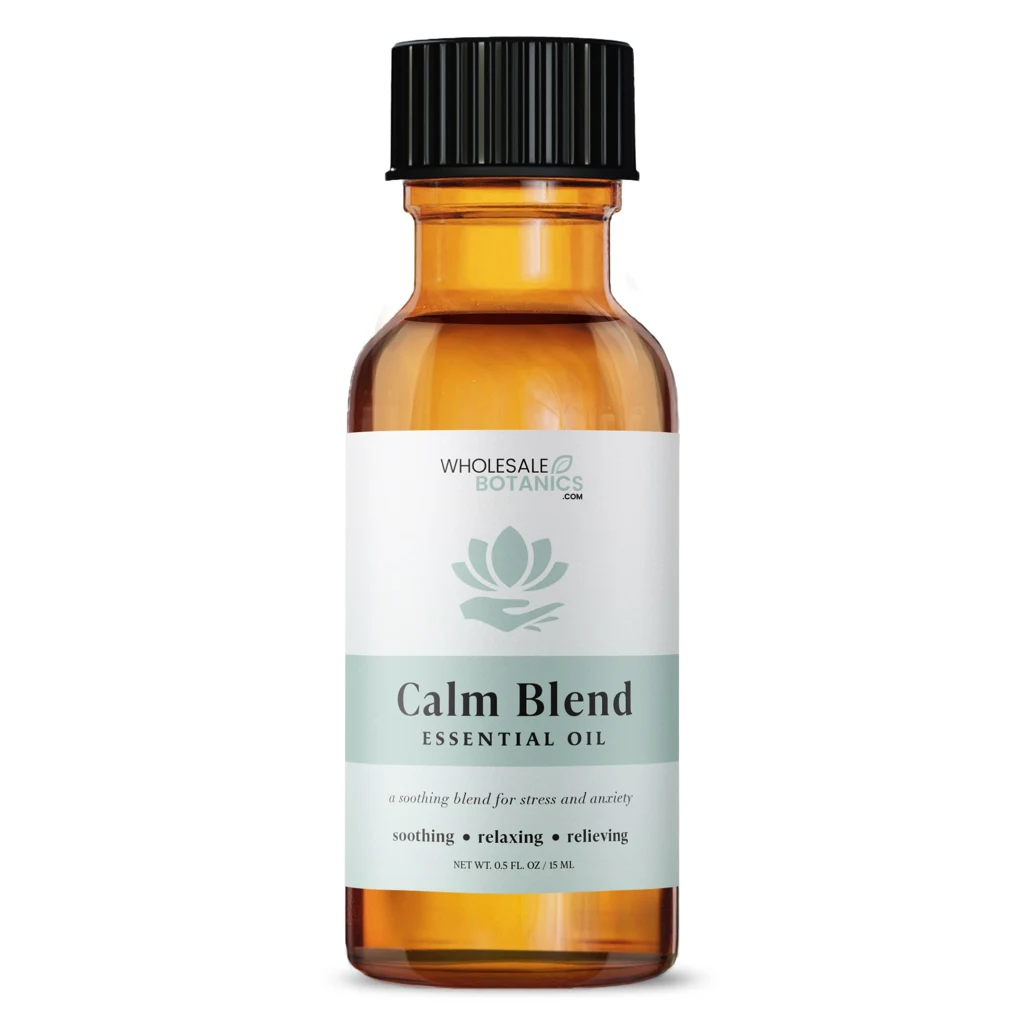
Lavender, chamomile, and bergamot already do a lot of work together in our Calm Essential Oil Blend — that's the whole point of blending them in the first place. But a diffuser runs for hours, and a three-oil blend doesn't always have the staying power to fill that time the way it smells straight out of the bottle. If you've noticed a diffuser blend go quiet or turn one-note after the first twenty minutes, you're not imagining it, and the fix usually isn't more drops of the same oil. It's picking the right third voice to carry the scent through the rest of the evening.
Table of Contents
Key Takeaways
- Bergamot is a top note, lavender is a middle note, and chamomile leans toward a base note.
- A diffuser blend can feel thin over time once bergamot's top note fades without support.
- Cedarwood is a true base note, dry and woody, making it the most predictable pairing.
- Most commercial vanilla oil is an absolute or oleoresin, not a true distilled essential oil.
- Sandalwood is a creamy base note but costs more due to harvest pressure on Santalum album.
Why the Blend Changes Character As It Diffuses
Perfumers have ranked scent compounds by how fast they evaporate since at least 1857, when Septimus Piesse built his "odophone," a scale running from the lightest, fastest-moving notes to the heaviest, slowest ones (Piesse, 1857). That top/middle/base framework explains exactly what happens inside a running diffuser. Bergamot peel oil is cold-pressed and full of small, volatile citrus terpenes, so it behaves as a top note — the first thing you smell, and the first to leave. Lavender sits in the middle, floral and steady. Chamomile, with its warm, apple-like round note, leans toward the base and lingers longest of the three.
That's why Calm opens bright and citrusy and settles into something softer and warmer the longer it runs. It's also why the blend can start to feel thin over a long diffusing session or in a large room: the top note that gave it its snap has already moved on, and there's nothing underneath to hold the rest of it up. Adding a genuine base-note oil — something slow and low-volatility — gives the blend a floor to rest on instead of just letting it drift up and out.
Cedarwood, Vanilla, and Sandalwood Aren't Interchangeable Here
All three get recommended as diffuser partners for floral-herbaceous blends, and generic blending guides tend to list them side by side as if they do the same job. They don't.
Cedarwood
Cedarwood oil is dry, woody, and genuinely a base note — slow to evaporate and inexpensive relative to the other two, since it's distilled from common, widely farmed cedar and juniper species rather than anything in short supply. Against Calm's herbaceous lavender and round chamomile, cedarwood doesn't compete for attention; it gives the blend weight and lets the citrus top note fade gracefully instead of leaving an empty space behind it. For a blend meant to sit quietly in a living room or office, this is the most predictable pairing of the three.
Vanilla
Here's where a lot of generic advice gets sloppy: most "vanilla essential oil" on the market isn't a steam-distilled essential oil at all. Vanilla beans yield very little through steam distillation, so the aromatic compounds are typically pulled out through solvent or CO2 extraction, producing a thick vanilla absolute or oleoresin that's then diluted in a carrier oil to make it pourable (Gallage & Møller, 2015). That's not a defect, just a different kind of material — usually sweeter and heavier in a different way than a true distilled oil. In a diffuser, that sweetness pulls Calm away from herbaceous and toward dessert-like fairly fast, so vanilla is the partner to use in the smallest proportion if you want warmth without losing the blend's floral-citrus identity.
Sandalwood
Sandalwood is a genuine base note with a creamy, soft-woody quality that pairs beautifully with chamomile's apple-like warmth, but it's worth knowing what you're buying. Indian sandalwood (Santalum album) has been under harvest pressure for decades, which pushed much of the global supply toward Australian and Pacific species such as Santalum spicatum (Baldovini, Delasalle, & Joulain, 2011). That supply history is part of why sandalwood tends to cost more than cedarwood and why quality varies more between suppliers. Treat it as the upgrade pick — richer and more complex than cedarwood, but worth choosing on purpose rather than by habit.
Ready to try Calm Essential Oil Blend?
Sold in sizes from 0.5 oz to 16 oz, lab-tested and shipped fast.
Shop Calm Essential Oil BlendBuilding the Actual Blend
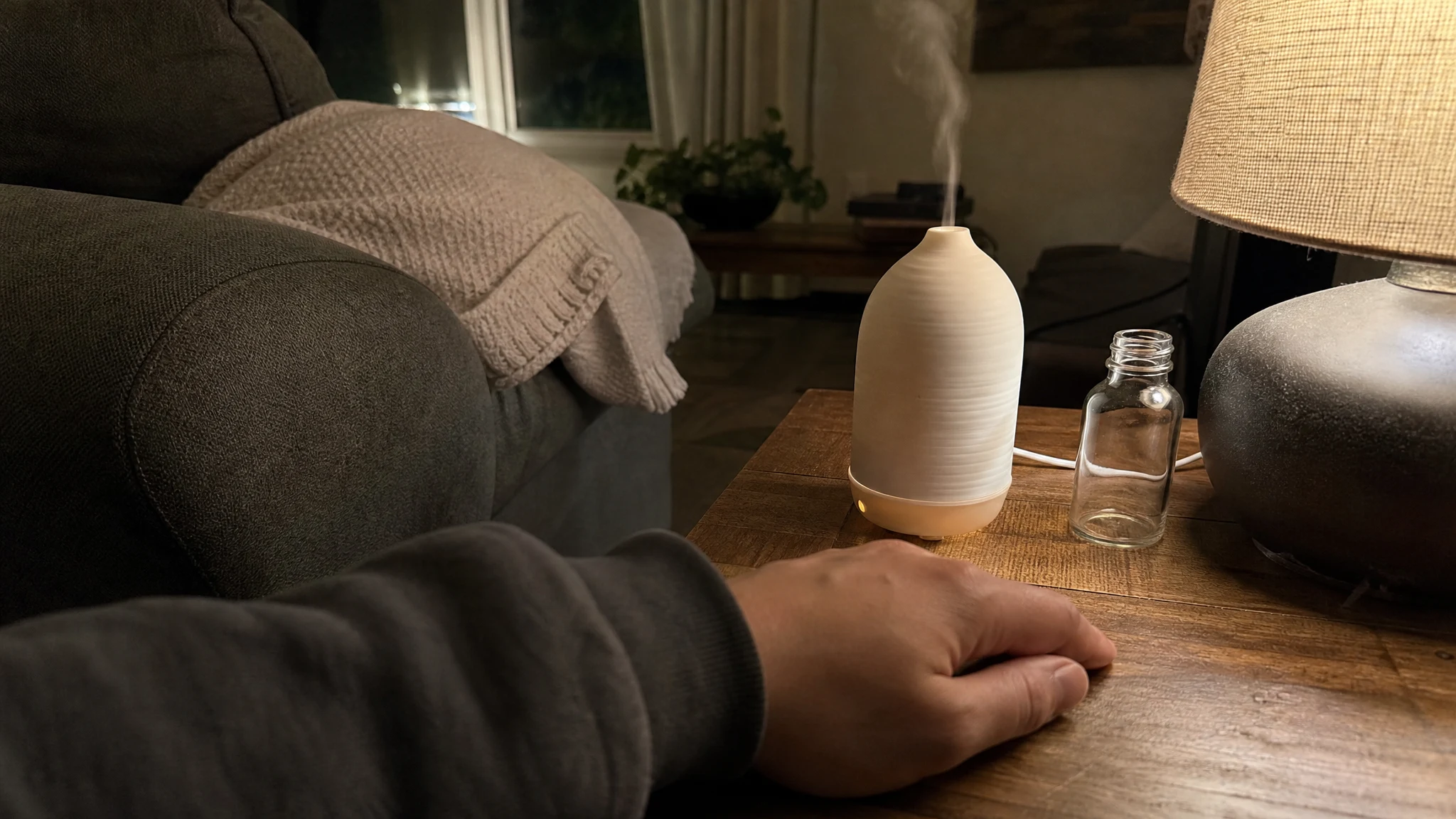
Because all three partners are base notes, or in vanilla's case behave like one, the biggest practical mistake is using equal parts. Base-leaning oils are more concentrated and slower to disperse, so they can dominate even in a small ratio. A reasonable starting point is three to four parts Calm to one part partner oil in your diffuser's water reservoir — cedarwood or sandalwood first, since they're more forgiving, and vanilla in an even smaller ratio given how far its sweetness carries. Give it ten or fifteen minutes before deciding whether to adjust, since base notes take longer to show up fully than that first blast of bergamot does.
The same ratio logic carries over if you take this past the diffuser. Stirring the combined oils into melted soap base or candle wax, or adding a few drops to a spray bottle of water and witch hazel for a room mist, works the same way: lead with Calm, add the partner oil sparingly, and let the mixture sit before deciding if it needs more.
Where to Be Careful
Bergamot peel oil is cold-pressed, and cold-pressed citrus oils carry bergapten and related furanocoumarins that make skin more reactive to UV light (Tisserand & Young, 2014). That's a non-issue in a diffuser, since nothing touches your skin, but if you're using Calm in a lotion or a room-and-body mist rather than just diffusing it, it's worth applying at night or avoiding direct sun afterward, and checking with a dermatologist or certified aromatherapist if you're unsure about a specific skin product.
If there are cats in the house, be more cautious about how long and how often any essential oil blend runs. Cats lack some of the liver enzymes other mammals use to clear plant compounds efficiently (Court, 2013), which is part of why veterinary guidance generally favors short diffusing stretches with good ventilation, in a room the cat can leave, over continuous use in a closed space. The same caution applies to anyone pregnant or managing a respiratory condition — a diffuser is a pleasant addition to a room, not a medical device, and it's worth checking with a doctor before making it a daily fixture if either applies to you.
None of these three partners is a wrong answer. Cedarwood is the dependable, inexpensive choice that lets Calm's own floral-citrus character carry the room. Vanilla trades some of that herbaceous identity for warmth and sweetness, and works best used sparingly. Sandalwood splits the difference — a real step up in richness, at a price and sourcing story that makes it worth reaching for on purpose rather than out of habit.
Frequently Asked Questions
What ratio of Calm to partner oil should I use in a diffuser?
A reasonable starting point is three to four parts Calm to one part partner oil in the water reservoir. Cedarwood or sandalwood can be added first since they're more forgiving, while vanilla should be used in an even smaller ratio given how far its sweetness carries. Give it ten to fifteen minutes before adjusting.
Why does the Calm blend smell different after it's been diffusing a while?
It smells different because the three oils evaporate at different rates. Bergamot is volatile and fades first, lavender holds steady in the middle, and chamomile's warm note lingers longest, so the scent shifts from bright and citrusy to softer and warmer over time.
Is cedarwood or sandalwood the better choice for pairing with Calm?
Cedarwood is the most predictable, forgiving pairing since it's a dry, inexpensive base note that gives the blend weight without competing for attention. Sandalwood is described as the upgrade pick, richer and more complex with a creamy quality that pairs well with chamomile, but it costs more and quality varies between suppliers.
Is it safe to diffuse Calm around cats?
The article advises extra caution, since cats lack certain liver enzymes needed to clear plant compounds efficiently. Veterinary guidance generally favors short diffusing stretches with good ventilation in a room the cat can leave, rather than continuous use in a closed space.
Can I use Calm in a lotion or skin-contact product safely?
The article notes that bergamot peel oil is cold-pressed and contains furanocoumarins that increase skin sensitivity to UV light. This isn't an issue when diffusing, but for lotions or body mists it suggests applying at night or avoiding sun afterward, and checking with a dermatologist or certified aromatherapist if unsure.
Should I add vanilla in the same amount as cedarwood or sandalwood?
No, the article says vanilla should be used in the smallest proportion of the three partners. Because most vanilla oil is a sweet, heavy absolute rather than a true distilled oil, it pulls Calm's scent toward dessert-like fairly fast if overused.